

Your Florida policy almost certainly covers a catastrophic ground cover collapse, and that is not sinkhole coverage. Fla. Stat. 627.706(1)(a) requires every insurer authorized to transact property insurance in Florida to provide catastrophic ground cover collapse coverage. Sinkhole loss coverage is separate: 627.706(1)(b) requires the insurer to make it available for an appropriate additional premium, and the insurer may require an inspection first. Raise it in your first call with your insurance agent, not in the week of closing.
Why the two coverages are not interchangeable
Under 627.706(2)(a), a catastrophic ground cover collapse is geological activity that results in all four of the following: the abrupt collapse of the ground cover; a depression in the ground cover clearly visible to the naked eye; structural damage to the covered building, including the foundation; and the insured structure being condemned and ordered to be vacated by the governmental agency authorized by law to issue that order. All four, not any one of them. The statute then settles most arguments in a sentence: damage consisting merely of the settling or cracking of a foundation, structure, or building does not constitute a loss resulting from a catastrophic ground cover collapse.
A sinkhole loss under 627.706(2)(j) is structural damage to the covered building caused by sinkhole activity, which 627.706(2)(i) ties to soils, sediments or rock raveling into subterranean voids created by the effect of water on limestone or similar rock. No condemnation element appears there, and that is the gap the optional coverage fills. Both definitions still run through the term structural damage, which 627.706(2)(k) pins to five technical tests tied to ACI standards and the Florida Building Code. Cosmetic cracking is not one of them.
| Question | Catastrophic ground cover collapse | Sinkhole loss coverage |
|---|---|---|
| Is it automatic? | Yes, required of every authorized property insurer under 627.706(1)(a) | No, it must be made available for an additional premium under 627.706(1)(b) |
| Must the structure be condemned? | Yes, condemned and ordered to be vacated is one of the four conditions | No, the definition in 627.706(2)(j) has no condemnation element |
| Is settling or cracking alone enough? | No, the statute excludes it by name | No, structural damage under 627.706(2)(k) must be met |
| Can the insurer inspect first? | Not applicable, the coverage is mandatory | Yes, 627.706(1)(b) permits an inspection before issuance |
| Deductible | Policy deductible | 1, 2, 5 or 10 percent of policy dwelling limits under 627.706(1)(b) |
Where a policy excludes sinkhole losses, 627.706(3) requires the insurer to say so in bold type of not less than 14 points, in wording the statute spells out. Look for that paragraph in your binder. It tells you which of the two you actually bought.
What a seller has to tell you, and what gets recorded
Under Fla. Stat. 627.7073(2)(c), the seller of real property upon which a sinkhole claim has been made by the seller and paid by the insurer must disclose to the buyer, before the closing, that a claim has been paid and whether or not the full amount of the proceeds was used to repair the sinkhole damage. The second half of that sentence is worth reading twice. A paid claim and a completed repair are two different facts, and the statute requires both.
There is a paper trail as well. Under 627.7073(2), an insurer that pays a sinkhole claim files the engineer or geologist report and certification with the county clerk of court for recording, at the insurer expense; under 627.7073(3) the engineer who monitored any stabilization or foundation repairs certifies that they were properly performed and files that too. The recording is not a title problem, because 627.7073(2)(a) states it does not constitute a lien, encumbrance or restriction on title, does not constitute a defect in title, and creates no cause of action against a grantor or a title insurer.
Because those documents are recorded, you can search for them by owner name and legal description. In Orange County that runs through the Comptroller Official Records Department; in Lake County, through the Clerk of the Circuit Court and Comptroller. The statute names the clerk of court, so confirm which office holds official records in your county before treating an empty search as an answer.
The Citizens county list, and why it changes your timeline
At Citizens Property Insurance, sinkhole loss coverage is an optional endorsement on HO-3, HO-8 and DP-1 or DP-3 policies with building coverage, while tenant contents, condominium and mobile home policies include it automatically. Catastrophic ground cover collapse is automatically included in most Citizens policies.
Citizens requires a sinkhole inspection before issuing the optional coverage in two situations: the applicant answers yes to any sinkhole-related question on the Sinkhole Loss Coverage Renewal Endorsement Request form, or the property sits in one of 16 named counties. As posted on October 29, 2026, that list is Alachua, Citrus, Hamilton, Hernando, Hillsborough, Lake, Manatee, Marion, Pasco, Pinellas, Polk, Seminole, Sumter, Suwannee, Wakulla and Washington. Three are in our service area: Lake, Polk and Seminole. Orange, Osceola and Volusia are not, so a buyer in Winter Garden, Horizon West, Ocoee, Kissimmee or St. Cloud reaches the requirement only through the application questions. Confirm the list with your agent when you apply, because it is the Citizens underwriting list and it can change.
The timing rules are what catch buyers. Citizens states that sinkhole loss coverage may not be added after a policy term has begun, and that where an inspection is required the coverage is not issued until Citizens reviews and approves the results. In most cases a decision arrives within 45 days of the date the inspection was ordered. You pay half the inspection fee directly to the Citizens-approved inspection company, and your half is nonrefundable whether the coverage is approved or declined.
Run that against an ordinary calendar. Take an Effective Date of November 2, 2026 and a closing 45 days out on December 17. An inspection ordered on November 12, day 10 of the contract, puts the outer edge of that 45-day window at December 27, which is 10 days after closing. The dates are an illustration, not a quoted service level, but the point holds: the determination window can outrun what is left of your contract, and the coverage cannot be added mid-term afterward.
What the state subsidence database can and cannot tell you
The Florida Geological Survey maintains a downloadable statewide database of reported subsidence incidents. It is worth a look, and it is not a clearance. The survey says so plainly: commonly a reported depression is not verified by a licensed professional geologist to be a true sinkhole and the cause is not known, which is why these are called subsidence incidents. The majority have not been field-checked, there was never a legal requirement that sinkhole occurrences or insurance claims be entered, reporting was voluntary, and claim-linked records are a small fraction of the total. An empty map near an address proves nothing about that address, and a nearby dot is a report rather than a finding. The survey publishes a sinkhole helpline at 850-245-2118 for questions about the data.
A buyer checklist for the inspection period
- In the first week of the contract, ask your insurance agent whether the policy being quoted includes sinkhole loss coverage or only catastrophic ground cover collapse, and what the premium and deductible options are.
- If the home is in Lake, Polk or Seminole County and the quote is from Citizens, assume an inspection is required and start the request immediately.
- Check the binder for the bold 14-point notice described in 627.706(3). Its presence means sinkhole losses are excluded from that policy.
- Search the county official records by owner name and legal description for a sinkhole report, certification or repair certification recorded under 627.7073.
- Ask the seller in writing whether a sinkhole claim has ever been made and paid on the property, and if so whether the full amount of the proceeds went to the repair.
- If a report turns up, have a professional engineer or professional geologist read it rather than relying on the conclusion. Under 627.7072 the scope of testing is left to that professional judgment, so two reports are not necessarily comparable.
- Settle how a sinkhole history affects your lender insurance requirement before you release a financing contingency. Citizens states that a property which does not qualify for sinkhole loss coverage still may be eligible for regular coverage.
Nothing in these statutes requires a sinkhole inspection to buy or sell a Florida home. Ordering one is a judgment call about a specific property. The timing lesson is the one that also shows up with roof age and homeowners insurance and flood insurance outside a mapped flood zone: open the policy question early enough that the answer arrives while you still have contract rights.
Frequently Asked Questions
Does every Florida homeowners policy cover sinkhole damage?
No. Fla. Stat. 627.706(1)(a) requires every insurer authorized to transact property insurance in Florida to provide coverage for a catastrophic ground cover collapse, which takes all four statutory conditions including the structure being condemned and ordered to be vacated. Sinkhole loss coverage is separate and optional under 627.706(1)(b), available for an appropriate additional premium, and the insurer may require an inspection first.
Does a Florida seller have to disclose a past sinkhole claim?
Under Fla. Stat. 627.7073(2)(c), a seller whose own sinkhole claim was paid by the insurer must disclose to the buyer, before the closing, that a claim has been paid and whether or not the full amount of the proceeds was used to repair the damage. The paying insurer also files the report and certification with the county clerk of court for recording under 627.7073(2).
Can I add sinkhole coverage after I close?
Not mid-term with Citizens, which states that sinkhole loss coverage may not be added after a policy term has begun. Where an inspection is required, coverage is not issued until Citizens reviews and approves the results, with a decision in most cases within 45 days of the date the inspection was ordered. Other carriers set their own endorsement rules, so ask yours.
Have us run the insurance question before you are out of time
We can pull the recorded documents for an address, read a sinkhole report or repair certification with you, and get the coverage question in front of an insurance agent early enough that the answer lands inside your inspection period. Set up a strategy session, or see how we work with buyers across Lake County and Central Florida.
Nelson Cruz, P.A.
Founder & CEO
MVP Home Group, Real Broker LLC
Nelson brings nearly two decades in law enforcement to his work in real estate. View the profile or contact our team at 407-901-9939 or [email protected].
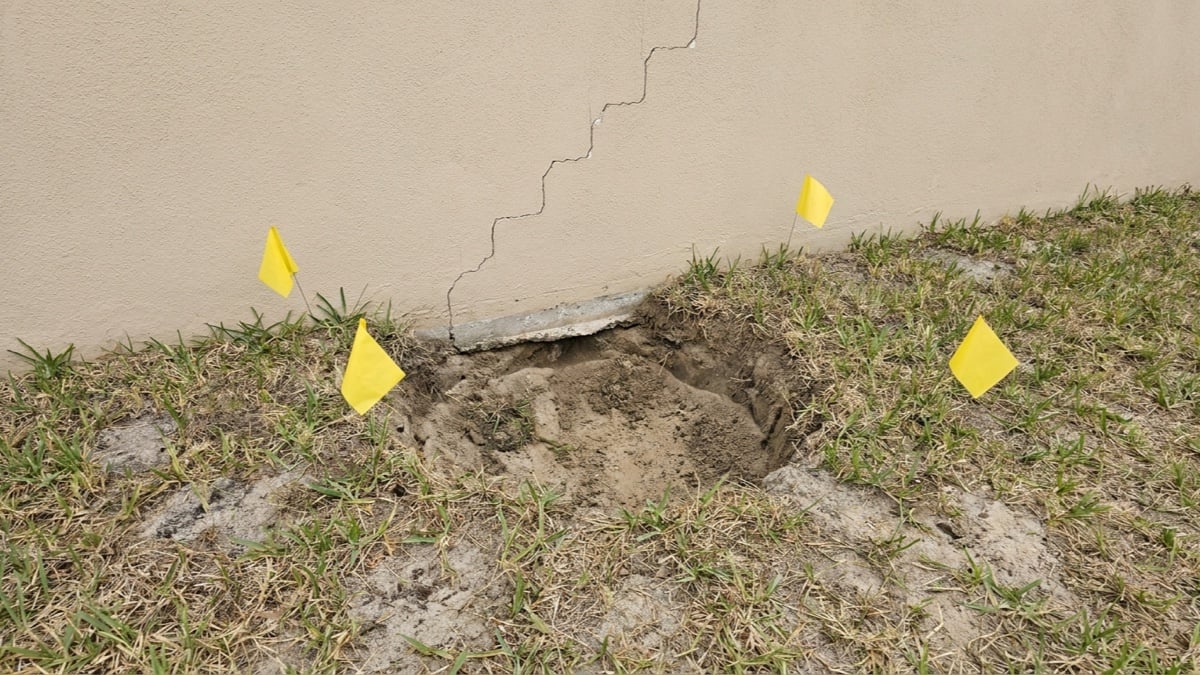
Featured image: AI-generated editorial illustration of a sunken patch of soil beside a foundation slab with a stair-step crack in the stucco, not a particular property or an actual sinkhole finding.