

Yes, and the first 60 days are when it is easiest. Section 627.4133(2), Florida Statutes, gives a personal residential policyholder at least 120 days of written notice before a cancellation, termination or nonrenewal takes effect, with two carve-outs: 10 days when the premium goes unpaid, and 20 days when the cancellation falls inside the first 60 days the insurance is in force. That 20-day floor disappears if the reason is a material misstatement, a misrepresentation, or a failure to meet underwriting requirements the carrier set before coverage started. For a buyer who bound a policy at the closing table, the last of those is the likely one.
The first 60 days belong to the underwriter
Coverage usually takes effect the day you close, and the statute measures from the date of effectuation of coverage rather than the day the policy packet arrives. A closing on Friday, November 20, 2026 puts day 60 on January 19, 2027.
Inside that window the carrier orders its own inspection. A roof condition flagged at binding and never corrected is a failure to comply with an underwriting requirement, one of the three reasons that switches off the 20-day notice floor in section 627.4133(2)(b)2.
After day 60, the list of reasons gets short
Section 627.4133(2)(b)3 closes the door most of the way. Once the policy has been in effect for 60 days, the insurer may not cancel it unless one of five things is true: a material misstatement, a nonpayment of premium, a failure to comply within 60 days after effectuation with underwriting requirements the insurer established before effectuation, a substantial change in the risk, or a cancellation applied to every insured in a given class.
The third item carries two conditions. The requirement has to pre-date your coverage, and the failure has to fall inside the same 60 days. Something the carrier discovers in month five and never made a condition of issuing the policy would have to qualify as a substantial change in the risk instead. Section 627.4133(2)(b)4 adds a further limit: after 60 days the insurer may not cancel or terminate based on credit information available in public records.
None of this stops a nonrenewal, which declines to write the next term and needs only the 120-day notice and a stated reason. A policy issued November 20, 2026 and renewing November 20, 2027 has a notice deadline of July 23, 2027.
A short notice buys you the full notice period
Section 627.4133(2)(d) is the provision most homeowners never learn about. If the insurer fails to give the notice this subsection requires, other than the 10-day nonpayment notice, coverage stays in force until replacement coverage takes effect or until a period equal to the required notice period has run from the day notice was given, whichever comes first, and the premium holds at the same rate. A defective notice does not void the decision, and it buys you the time the statute intended.
Filing a claim is not an automatic exit
Section 627.4133(3) bars using an act-of-God claim as a cause for cancellation or nonrenewal unless the insurer can demonstrate, by claims frequency or otherwise, that you failed to take action it reasonably requested to prevent a recurrence. Section 627.4133(6) applies the same test to a single water damage claim used as the sole cause.
Section 627.4133(2)(e) goes further while repairs are open. An authorized insurer may not cancel or nonrenew for 90 days after the property is repaired where the damage came from a hurricane or wind loss covered by an emergency declaration under section 252.36 and an order of the Commissioner of Insurance Regulation. For any other covered peril, the hold runs until the earlier of repair or one year after the final claim payment. The carrier can still act on 10 days for nonpayment, or 45 days for claim fraud, a repair delay you unreasonably caused, or payment of policy limits.
Surplus lines policies answer to a different section
Check the carrier’s status first. Section 626.913(4) states that except as specifically stated to apply to surplus lines insurers, chapter 627 does not apply to surplus lines insurance. Section 627.4133 carries no such statement, and its claim-repair protection is written for an authorized insurer. Surplus lines policies run on section 626.9201 instead.
| Situation | Authorized insurer, s. 627.4133(2) | Surplus lines insurer, s. 626.9201 |
|---|---|---|
| Nonrenewal at the end of the term | At least 120 days’ notice | At least 45 days’ notice |
| Cancellation or termination mid-term | At least 120 days’ notice with the reason | At least 45 days’ notice with the reason |
| Cancellation for nonpayment | At least 10 days | At least 10 days |
| Early cancellation, other reasons | At least 20 days, inside the first 60 days | At least 20 days, inside the first 90 days |
| That early floor does not apply when | There has been a material misstatement, a misrepresentation, or a failure to comply with the insurer’s underwriting requirements | |
| Insurer sends a short notice | Coverage runs for the full required period after notice, or until replacement coverage | Coverage runs 45 days after notice, or until replacement coverage |
When the escrow account is what failed
A lapse is sometimes the servicer’s doing. Section 501.137 requires a lender holding escrow to pay insurance premiums promptly once they come due and adequate funds are on deposit, so coverage does not lapse. Where the lender neglects such a premium and the payment is not more than 90 days overdue, the insurer shall reinstate retroactive to the cancellation date and the lender must reimburse any reinstatement penalty or fee. Past 90 days, or where the insurer refuses, the lender covers the gap between the old policy’s cost and a comparable new one for two years.
If coverage does lapse, 12 C.F.R. 1024.37 makes the servicer mail a notice at least 45 days before assessing any force-placed charge, and a second no earlier than 30 days after the first. Produce proof of coverage and section 1024.37(g) gives it 15 days to cancel that policy and refund overlapping charges.
If you cannot replace the coverage
Citizens Property Insurance Corporation is a conditional backstop. Under section 627.351(6)(c)5.a, a new application on a personal lines residential primary residence is not eligible unless an authorized insurer’s premium is more than 20 percent greater than Citizens’ premium for comparable coverage. To illustrate, against a $3,200 Citizens premium the line sits above $3,840, so a private quote of $3,800 is 18.75 percent higher and leaves you ineligible.
If the notice itself looks improper, the Florida Department of Financial Services asks you to raise it with the carrier first, then submit a concern through its Consumer Assistance Portal or the Insurance Consumer Helpline at 1-877-MY-FL-CFO.
Before closing, and on the day you close
- Ask the agent in writing for the binder’s underwriting conditions and clear every one before coverage effectuates. That list is what the 60-day rule runs against.
- Confirm whether the carrier is authorized or surplus lines, which changes your notice periods and your protection while a claim is open.
- Order the inspections the carrier will rely on. A 4-point inspection and a wind mitigation inspection show what will be flagged, and roof age is the condition most likely to end a new policy early.
- Calendar day 60, and document every item you were asked to fix before it.
- Date-stamp any notice, count the days to its stated effective date, and compare the stated reason against the grounds the statute allows.
Frequently asked questions
My insurer cancelled three weeks after closing. Is that legal?
It can be. Inside the first 60 days, section 627.4133(2)(b)2 normally requires 20 days of written notice with the reason, and that floor does not apply where the reason is a material misstatement, a misrepresentation, or a failure to comply with underwriting requirements set before coverage started. If the stated reason is none of those three and you got fewer than 20 days, section 627.4133(2)(d) keeps coverage in force for the full required period, counted from the day notice was given.
Can they drop me for one claim?
Not on those facts alone. Section 627.4133(3) bars an act-of-God claim as a cause for cancellation or nonrenewal unless the insurer demonstrates, by claims frequency or otherwise, that you failed to take action it reasonably requested to prevent a recurrence, and section 627.4133(6) applies the same test where a single water damage claim is the sole cause. Both put the demonstration on the insurer.
Does a nonrenewal notice mean I have to find coverage right away?
You have more runway than a cancellation gives you. An authorized insurer must deliver that notice at least 120 days before the renewal date, roughly four months to shop. A surplus lines carrier owes 45 days under section 626.9201(1). Use the time, because force-placed coverage costs more and protects the lender.
Talk it through before you close
The expensive version of this problem is discovering a carrier’s conditions after the deed records. If you are under contract now, book a strategy session with our team at mvphomegroup.com/nelsoncruz. We read the binder conditions and the inspection reports while the inspection period is still open, when a roof or a water heater is still a negotiation. This is general information about Florida insurance statutes and federal servicing rules, not legal advice.
Nelson Cruz, P.A.
Founder & CEO
MVP Home Group, Real Broker LLC
Nelson brings nearly two decades in law enforcement to his work in real estate. View Nelson’s profile or contact our team at 407-901-9939 or [email protected].
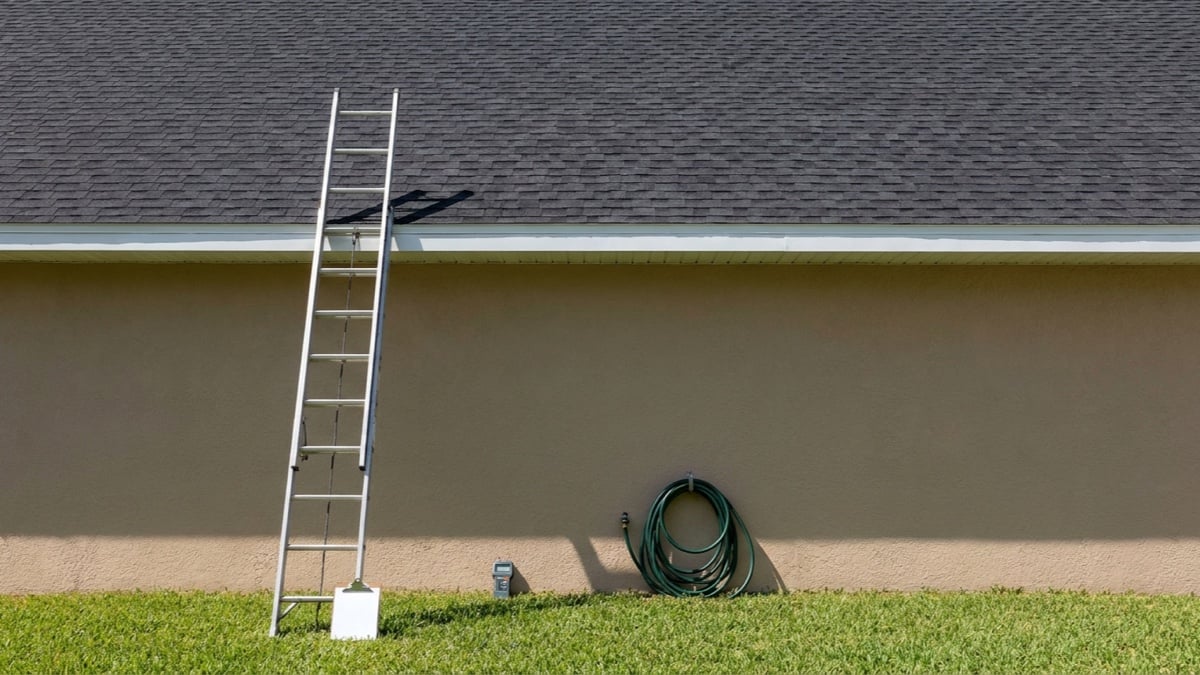
Featured image: AI-generated editorial illustration of an extension ladder against the soffit of a stucco house below an asphalt shingle roof, with a blank clipboard, a moisture meter and a coiled hose on the lawn. No readable text. Not a particular property or carrier.