

A Section 1031 exchange has to be in place before your Florida rental closes, not after. The Internal Revenue Code lets you defer federal tax when you trade investment real property for more investment real property, but the Treasury regulation treats the deal as an ordinary taxable sale if you take the money first. Both of the clocks that govern the purchase, 45 days and 180 days, start running on the day your sale closes.
What the exchange defers, and what it leaves alone
Section 1031(a)(1) says no gain or loss is recognized on the exchange of real property held for productive use in a trade or business or for investment, if it is exchanged solely for like-kind real property that will also be held for productive use or investment. Two conditions sit in that sentence: how you held what you are selling, and how you intend to hold what you buy.
Section 1031(a)(2) removes real property held primarily for sale, which is the provision that separates a long-term rental from renovate-and-flip inventory. The IRS adds that since the Tax Cuts and Jobs Act, Section 1031 reaches real property only. On what counts as like kind, the IRS states that real properties generally are of like kind regardless of whether they are improved or unimproved, and that real property in the United States is not like kind to real property outside it. A rented single-family house can be exchanged for a fourplex, raw acreage or a commercial building, but not for your own home, which runs on the separate track we cover in capital gains tax when you sell your Florida home.
The section defers rather than forgives. Section 1031(d) carries the deferred gain into the basis of the replacement property and treats a liability the other party assumes as money received, so debt coming off the sale without equivalent debt going onto the purchase can trigger gain under Section 1031(b). Run that netting with your CPA.
Two clocks, and the one that can end early
Treasury Regulation 1.1031(k)-1(b)(2)(i) sets the first: the identification period begins on the date you transfer the relinquished property and ends at midnight on the 45th day after it. The second is where sellers get surprised. Under 1.1031(k)-1(b)(2)(ii), the exchange period ends at midnight on the earlier of the 180th day after the transfer or the due date, including extensions, of your return for the tax year in which the transfer occurred. The statute itself says the same thing at Section 1031(a)(3)(B).
Read that second deadline carefully if you close late in the year. A relinquished property that transfers on December 1, 2026 produces a 45th day of January 15, 2027 and a 180th day of May 30, 2027. An individual return for 2026 is due April 15, 2027, and April 15 is earlier than May 30, so without an extension the exchange period closes on April 15 and 45 of the 180 days disappear. The regulation’s phrase “including extensions” is what gives them back.
| Period | Starts | Ends | Source |
|---|---|---|---|
| Identification period | Date you transfer the property you are selling | Midnight on the 45th day after that date | 26 CFR 1.1031(k)-1(b)(2)(i) |
| Exchange period | Same transfer date | Midnight on the earlier of the 180th day or your return due date including extensions | 26 CFR 1.1031(k)-1(b)(2)(ii) |
| If several properties are sold on different dates | Earliest of those transfer dates | Both periods measured from that earliest date | 26 CFR 1.1031(k)-1(b)(2)(iii) |
How the replacement property has to be identified
Identification has to happen on paper. Under 1.1031(k)-1(c)(2) the property has to be designated in a written document signed by you and sent before the end of the identification period to the person obligated to transfer the replacement property, or to any other person involved in the exchange other than you or a disqualified person. Paragraph (c)(3) requires the property to be unambiguously described, and names the three ways to do it: a legal description, a street address, or a distinguishable name.
You are not limited to one candidate. Paragraph (c)(4) allows either three properties regardless of value, the 3-property rule, or any number whose combined fair market value at the end of the identification period does not exceed 200 percent of the value of everything you sold. Exceed both and one escape remains: receive, before the exchange period ends, identified property worth at least 95 percent of the total identified. An identification can be revoked under paragraph (c)(6), in writing, to the same person, before the 45 days run out.
Forty-five days is tighter than the local market makes it look. The Orlando Regional REALTOR Association reported homes spending an average of 66 days on the market in October 2026, on data as of November 9, 2026. The search for a replacement belongs underway before your own sale closes.
Why the intermediary has to be hired before closing
Regulation 1.1031(k)-1(f)(1) is the trap. If you actually or constructively receive money or other property before receiving the replacement property, gain can be recognized, and receiving the full consideration makes the transaction a sale rather than an exchange. Proceeds landing in your account at closing is exactly that.
The way around it is the qualified intermediary safe harbor at paragraph (g)(4). A qualified intermediary is a person who is not you and not a disqualified person, and who enters a written exchange agreement under which it acquires the property you are selling, transfers it, acquires the replacement property and transfers that to you. Paragraph (g)(4)(v) allows this to happen through your existing contract: assign your rights to the intermediary and notify all parties to that contract in writing on or before the date of the transfer. Paragraph (g)(6) requires the agreement to leave you with no right to receive, pledge, borrow against or otherwise benefit from the money before the exchange period ends.
Who is disqualified matters when you assemble the team. Paragraph (k)(2) treats as your agent anyone who has acted as your employee, attorney, accountant, investment banker or broker, or real estate agent or broker within the two-year period ending on the date of the transfer, so your listing agent and your own CPA are out. It carves back two things: services performed for you with respect to Section 1031 exchanges, and routine financial, title insurance, escrow or trust services by a financial institution or title insurance company.
What the Florida contract promises, and what it does not
The statewide form already anticipates this. STANDARD N of the FloridaRealtors/FloridaBar AS IS Residential Contract for Sale and Purchase, form ASIS-7x Rev. 12/26, reads: “If either Seller or Buyer wish to enter into a like-kind exchange (either simultaneously with Closing or deferred) under Section 1031 of the Internal Revenue Code (“Exchange”), the other party shall cooperate in all reasonable respects to effectuate the Exchange, including execution of documents; provided, however, cooperating party shall incur no liability or expense related to the Exchange, and Closing shall not be contingent upon, nor extended or delayed by, such Exchange.”
Three limits are doing real work there. The other side signs what the intermediary needs, but takes on no liability or expense, cannot be asked to make closing conditional on your exchange, and owes you no extra days. Every timing risk stays on your side of the table.
Florida’s transfer tax is unaffected by any of this. Section 201.02(1)(a) of the 2026 Florida Statutes charges 70 cents on each $100 of consideration on a deed, and consideration includes any mortgage or other encumbrance, whether or not the underlying debt is assumed. Florida Administrative Code Rule 12B-4.013(1), effective January 25, 2026, lists an exchange of property among conveyances subject to the tax and sets the consideration for each deed at the fair market value of the property transferred plus any other consideration. A federal deferral is not a Florida exemption. Our breakdown of the taxes a Florida closing triggers has the rest.
Before you sign the listing agreement
- Confirm how the property has been held and reported. The test under Section 1031(a)(1) is your use, and Section 1031(a)(2) excludes property held primarily for sale.
- Engage the qualified intermediary and get the assignment notice to the buyer on or before the transfer date, as 1.1031(k)-1(g)(4)(v) requires. Your own agent, attorney and accountant are disqualified under paragraph (k)(2).
- Map both dates from your scheduled closing, and if the 180th day falls past your return due date, decide with your CPA whether to extend the return.
- If a tenant is in place, settle possession before the exchange clock is also running. We cover that in selling a Florida house with a tenant.
Questions Florida rental owners ask
I already closed and the proceeds are in my account. Can I still do an exchange?
No. Regulation 1.1031(k)-1(f)(1) treats actual or constructive receipt of the consideration before you receive replacement property as a sale rather than a deferred exchange. The safe harbors at paragraph (g) work only through an arrangement set up before the transfer, which is why the intermediary has to be engaged while the deal is still pending.
Can I identify more than three replacement properties?
Yes, under the alternative in 1.1031(k)-1(c)(4). The 3-property rule lets you name three at any value. Beyond three, their combined fair market value at the end of the identification period cannot exceed 200 percent of the value of what you sold, unless you actually receive identified property worth at least 95 percent of everything you identified before the exchange period ends.
What happens if the 45th day passes without an identification?
Section 1031(a)(3)(A) treats property received in the exchange as property that is not like-kind if it was not identified within 45 days of the transfer. The deferral fails on that property, and the sale is taxed as a sale.
About these sources
Sources read on November 17, 2026: 26 U.S.C. 1031 via the U.S. Government Publishing Office; 26 CFR 1.1031(k)-1 via the eCFR, Title 26 current through November 12, 2026; the IRS like-kind exchanges page reviewed May 1, 2026; the FloridaRealtors/FloridaBar ASIS-7x Rev. 12/26 form; the 2026 Florida Statutes and Florida Administrative Code Rule 12B-4.013 effective January 25, 2026; and the Orlando Regional REALTOR Association October 2026 narrative. None of this is tax advice for your situation.
Sequencing decides most exchanges, weeks before closing, while the listing strategy is still being set. If you are weighing a sale of a Central Florida rental against a 1031 purchase, book a strategy session at mvphomegroup.com/nelsoncruz and we will build the timeline backward from your target closing date alongside your CPA and intermediary.
Nelson Cruz, P.A.
Founder & CEO, MVP Home Group, Real Broker LLC
Nelson brings nearly two decades in law enforcement to his work in real estate. View Nelson’s profile or contact our team at 407-901-9939.
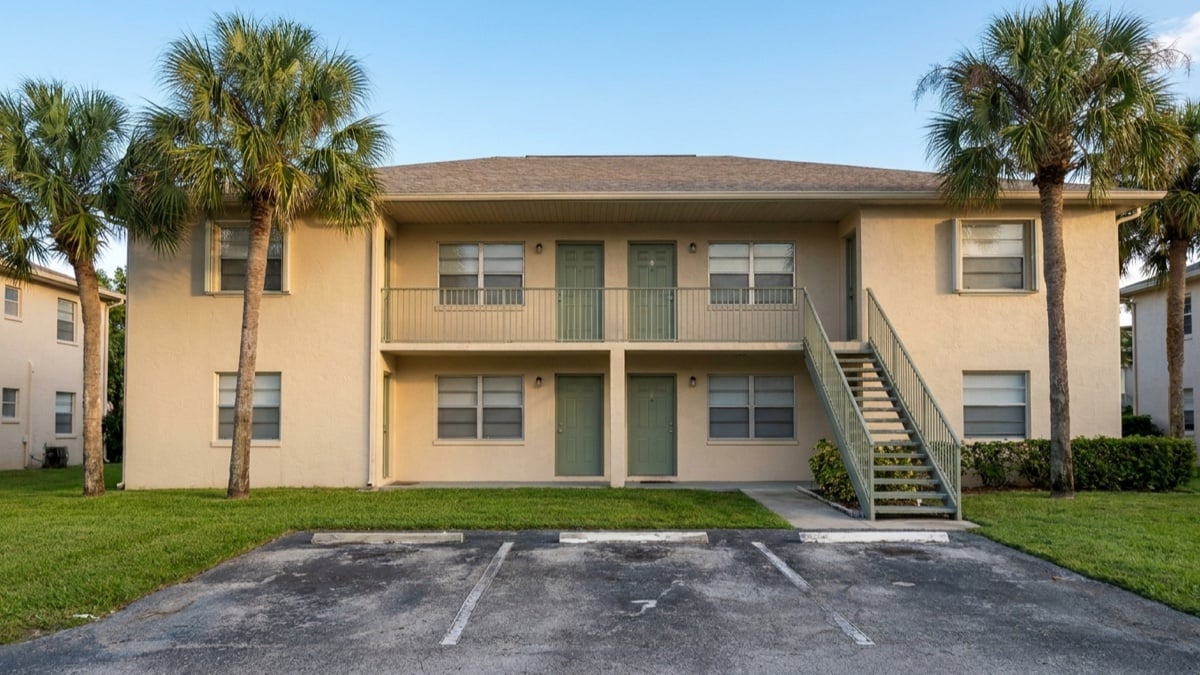
Featured image: AI-generated editorial illustration of a two-story stucco fourplex rental building with an exterior staircase and palms. It does not depict a particular property.