

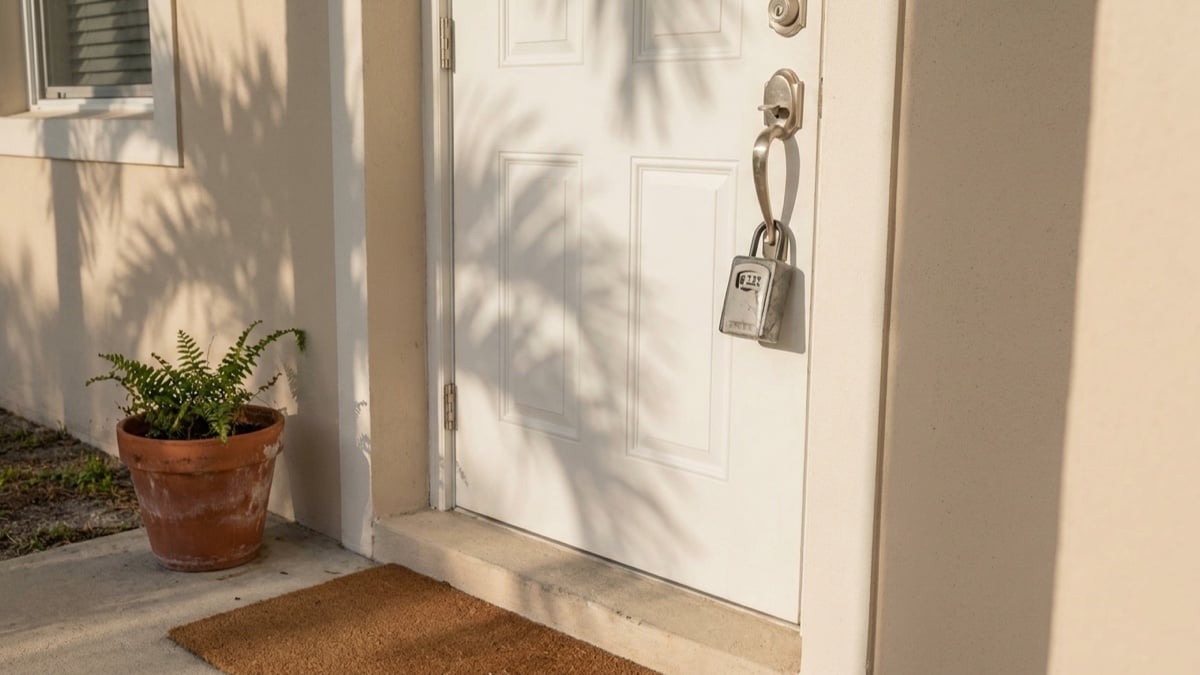
Yes, you can sell a Florida home that carries a reverse mortgage at any time, and federal rule lets you repay the loan in full without any charge or penalty. The balance is paid off from your sale proceeds at closing, anything above the payoff is yours, and if the loan has grown larger than the house is worth, a sale at the appraised value still clears it because FHA insurance covers the gap.
How the payoff works at closing
A Home Equity Conversion Mortgage, which the Consumer Financial Protection Bureau calls the most common reverse mortgage type, becomes due and payable in full when a borrower conveys all of his or her title and no other borrower retains title, under 24 CFR 206.27(c)(1). Your sale is the repayment event itself, so you do not need the servicer’s permission to list. On prepayment, 24 CFR 206.209(a) is unusually blunt: the borrower “may repay a mortgage in full or prepay a mortgage in part without charge or penalty at any time, regardless of any limitations on repayment or prepayment stated in a mortgage.”
The figure you pay off is bigger than the money you took. Interest begins accruing on the funding date and is added to the balance monthly under 24 CFR 206.19(g), and the monthly mortgage insurance premium may be added to it as well under 24 CFR 206.27(b)(7).
One condition decides whether this closes cleanly. Under 24 CFR 206.125(c) the lender satisfies the mortgage of record to facilitate your sale “provided that there are no junior liens” and all the net proceeds go to the lender. The mortgage itself also bars you from permitting liens that are not subordinate to it, under 24 CFR 206.27(b)(3). A recorded judgment, an unreleased second line of credit or a contractor’s lien from an unpaid remodel is the thing that stalls these files, and it is worth finding months before a buyer is waiting.
Take the Orlando Regional REALTOR Association October 2026 single-family median of $436,289 as the sale price, with a payoff of $310,000. The lender is paid first and $126,289 is gross to you before closing costs and commission. That is the ordinary case, and it works like any other mortgage payoff.
Can I sell my house if I have a reverse mortgage and owe more than it is worth?
Yes, and this is the part most published answers get wrong. Federal rule sets two different minimum sale prices, and which applies turns on whether the loan is already due and payable when the contract is signed.
If the loan is not yet due and payable, 24 CFR 206.125(c) says the borrower “may sell the property for at least the lesser of the outstanding loan balance or the appraised value.” When you owe more than the home is worth, the lesser of those two is the appraised value, so a sale at the appraisal clears the loan. If the loan is already due and payable when the contract is executed, the floor instead comes from 24 CFR 206.125(a)(2)(ii), which sets the minimum at an amount HUD determines by notice and caps that amount at 95 percent of the appraised value. HUD states the 95 percent figure in its own FHA answer published June 11, 2024, and the Consumer Financial Protection Bureau states it in guidance updated September 13, 2024.
Either way you are not on the hook for the shortfall. 24 CFR 206.27(b)(8) provides that the borrower “shall have no personal liability for payment of the outstanding loan balance,” that the lender “shall enforce the debt only through sale of the property,” and that no deficiency judgment may be obtained against the borrower if the mortgage is foreclosed. This is the sharp difference from a conventional loan, where selling for less than you owe requires the lender to agree to take less.
| Loan status when the contract is signed | Minimum sale price under federal rule | On a $436,289 appraisal |
|---|---|---|
| Not due and payable (you still live there and the loan is current) | The lesser of the outstanding loan balance or the appraised value, under 24 CFR 206.125(c) | $436,289 if the balance is higher than the appraisal |
| Already due and payable (death of the last borrower, a move-out, or unpaid property charges) | The amount HUD sets by notice, capped by rule at 95 percent of appraised value, under 24 CFR 206.125(a)(2)(ii) | $414,474.55 at 95 percent |
On a $470,000 balance against that $436,289 appraisal, a sale at the appraised value leaves a $33,711 shortfall that FHA insurance absorbs, and you walk away owing nothing. The $21,814.45 gap between the two floors is why the status question is worth asking in writing before you price the listing.
What Florida law gives you: the payoff letter and the release
Because the balance moves every month, the payoff number is the whole negotiation, and Florida gives you a statutory way to pin it down. Under section 701.04(1)(a), Florida Statutes, the lender or servicer must send an estoppel letter stating the unpaid balance within 10 days after receiving a written request from the mortgagor or the record title owner. Section 701.04(1)(b) requires that letter to itemize principal, interest and any other charges, and to state the interest accruing on a per-day basis after the date in the letter.
That letter is binding in a way most sellers do not realize. Section 701.04(1)(c)1 provides that the servicer “may not qualify, reserve the right to change, or condition or disclaim the reliance of others on the information provided,” and that any attempt to do so “is void and unenforceable.” If the figures turn out to be wrong and no corrected letter arrives in time, subsection (1)(c)3 bars the servicer from denying their accuracy against anyone who relied on them.
How you send the request changes the clock. Under section 701.04(1)(f)1, a request sent by email, fax or other electronic means counts as received the day it is sent, while a request mailed first class is treated as received five business days after it goes to the Postal Service. Send it electronically. After payoff, section 701.04(2)(a) gives the servicer 60 days to execute the release, record it and send the recorded copy to you, and the prevailing party in a suit to enforce that duty recovers reasonable attorney fees and costs.
What to settle before you list
- Request the estoppel letter in writing through the servicer’s electronic channel, and read the per-day interest figure. Price the listing against a payoff dated near your realistic closing date, not against today’s balance.
- Order a title search early and clear any junior lien, since the lender’s duty to release the mortgage at your closing is conditioned on there being none. Confirm who must sign the deed at the same time, because Florida homestead rules can require a spouse’s signature even when only one spouse is the borrower.
- If the balance might exceed the value, ask the servicer in writing whether the loan is already due and payable. That one answer moves your minimum sale price by thousands of dollars.
Frequently asked questions
Do I need my lender’s approval to put the house on the market?
No. You hold title throughout a reverse mortgage, and the loan becomes due and payable when you convey that title under 24 CFR 206.27(c)(1). Prepayment is permitted at any time without charge or penalty under 24 CFR 206.209(a). The servicer’s role in your sale is to supply the payoff figure and to release the mortgage of record.
What happens if I die before the house sells?
The loan becomes due and payable on the death of the last surviving borrower under 24 CFR 206.27(c)(1), unless that status is deferred for an eligible non-borrowing spouse under 24 CFR 206.27(c)(3). Your heirs may then pay the balance in full, sell, or deed the property back, under 24 CFR 206.125(a)(2), with the 95 percent floor applying to their sale.
Who pays for the appraisal when the balance is close to the value?
Under 24 CFR 206.125(b) the lender must have the property appraised no later than 30 days after receiving a request connected to a potential sale. The appraisal is at the requesting party’s expense unless the mortgage is due and payable, in which case the lender pays and may be reimbursed out of the sale proceeds.
About these sources
Sources read on November 17, 2026: 24 CFR 206.27, 206.125 and 206.209 via the eCFR, Title 24 current through the November 12, 2026 issue date; HUD Mortgagee Letter 2015-10, April 23, 2015; the HUD FHA Resource Center answer published June 11, 2024; CFPB guidance updated September 13, 2024; the 2026 Florida Statutes section 701.04; and the Orlando Regional REALTOR Association October 2026 narrative, data as of November 9, 2026. None of this is legal or tax advice.
A reverse mortgage payoff is a moving number, and the listing price has to be set against it rather than against the equity you remember. If you are weighing a sale of a Central Florida home that carries one, book a strategy session at mvphomegroup.com/nelsoncruz and we will work the payoff, the liens and the pricing backward from your target closing date alongside your servicer.
Nelson Cruz, P.A.
Founder & CEO, MVP Home Group, Real Broker LLC
Nelson brings nearly two decades in law enforcement to his work in real estate. View Nelson’s profile or contact our team at 407-901-9939.
Featured image: AI-generated editorial illustration of a realtor lockbox hanging on the front-door handle of a stucco home. It does not depict a particular property.