

Property inside downtown Orlando’s Downtown Development Board district carries a line the rest of the city does not: Downtown Improvement, one mill, which is $1 for every $1,000 of taxable value. On the 2026 Orange County roll that brings the combined rate to 18.9818 mills inside the district against 17.9818 mills elsewhere in Orlando. Homesteaded property is exempt from the levy under the board’s own charter act.
That last sentence is where the money is. The buyers who pay the extra mill are the ones not claiming homestead: investors, second-home buyers, and anyone purchasing through an entity.
The board behind the line on your bill
The Downtown Development Board is an agency of the City of Orlando created by Special Act of the Florida Legislature in 1971. The editor’s note on the City Charter traces Chapter 18 to Laws of Florida chapter 71-810, filed with the Secretary of State on June 23, 1971 and amended by chapter 78-577. Five members serve three-year terms, appointed by the Mayor with City Council concurrence. The board meets the fourth Wednesday of each month at City Hall, and its fiscal year runs October 1 to September 30.
Section 9 of the Act sets the ceiling. The rate “shall not exceed one (1) mill on each dollar of tax base,” so the 2026 levy is already at the maximum the Act allows. Section 9 also makes the levy an annual decision rather than a fixed charge: the tax “may be levied or caused to be levied annually by the City Council, in its discretion, upon request of the Board.” The same section puts the levy outside the ten-mill cap that the state constitution and statutes place on city operating millage, which is why Orlando can be at 6.6500 mills for operations and still collect this one on top.
Homestead changes the answer completely
Section 9 carries a carve-out that decides the whole question: “property under homestead exemption shall not be taxed.” The 2026 Orange County roll bears it out. Two homesteaded condominium units inside the district show no Downtown Improvement line at all and total 17.9818 mills. A non-homesteaded unit in the same building shows Downtown Improvement at 1.0000 mill and totals 18.9818 mills. The exemption does not shave the line down. It removes it.
The consequence runs with the owner rather than with the unit. A seller who homesteads the place will hand you a current tax bill with no Downtown Improvement line on it, and if you buy as a rental or a second home, the line appears on yours. That sits on top of the reassessment that follows any Florida purchase, which we covered in why your property taxes jump the year after you buy. If you do intend to make the place your permanent residence, the homestead exemption rules decide both questions at once.
What the extra mill costs
| 2026 taxable value | Downtown Improvement at 1.0000 mill | Total at 18.9818 mills, inside the district, no homestead | Total at 17.9818 mills, homesteaded or outside the district |
|---|---|---|---|
| $300,000 | $300.00 | $5,694.54 | $5,394.54 |
| $400,000 | $400.00 | $7,592.72 | $7,192.72 |
| $500,000 | $500.00 | $9,490.90 | $8,990.90 |
The six rates behind those totals are the 2026 school levies of 3.0950 and 3.2480, General County at 4.4347, City of Orlando at 6.6500, the library operating levy at 0.3748 and the St Johns River Water Management District at 0.1793. They are ad valorem only. Non-ad valorem assessments such as the City’s stormwater charge appear in a separate section of the same tax notice and are not part of any millage rate.
The redevelopment agency is a different thing and adds nothing
Downtown Orlando also sits inside a Community Redevelopment Area, and the two bodies are easy to confuse. The City’s Community Redevelopment Agency was created in 1980 by City Council resolution under Part III of Chapter 163, Florida Statutes, and the seven members of City Council serve as its members. The City states on its own page that the CRA “does not impose any additional taxes or fees.”
It is funded by tax increment under section 163.387, Florida Statutes. That statute sets the annual deposit into the redevelopment trust fund at 95 percent of the difference between the ad valorem taxes each taxing authority levies in the area now, excluding debt service millage, and what those same rates would have produced on the roll that was in place before the trust fund was created. A governing body may fund at a lower share in its ordinance, though never below 50 percent of that difference. None of that arithmetic adds a rate to a tax bill. The increment is carved out of taxes the county, the city and the other authorities already collect.
Two downtown boundaries, two different maps
The taxing district and the redevelopment area are not the same shape. The Downtown Development Board’s area, named the Orlando Central City Neighborhood Development Area, covers 1,000 acres. The Downtown Redevelopment Area the CRA works in covers 1,711 acres. A downtown address can sit inside the redevelopment area and outside the taxing district, so being told a property is in the downtown CRA says nothing about whether the Downtown Improvement line applies to it.
Section 4 of the Act ties the original district to an ordinance City Council adopted on December 15, 1969 and lets Council add or remove territory afterward, so a boundary answer from a few years ago is worth re-checking.
How downtown compares with Winter Park
Winter Park is one of the corridors the Live Move Orlando downtown guide points buyers toward for comparison. On the Property Appraiser’s 2026 final millage chart, Winter Park’s combined rate is 15.2430 mills against 18.9818 downtown. The largest single driver of that gap is the city operating rate, 4.2860 in Winter Park against 6.6500 in Orlando. One full mill of the remainder is the Downtown Improvement levy, and it is the only rate in the stack that drops off the bill entirely when the owner holds homestead.
How to check an address before you write the offer
- Pull the parcel on the Orange County Property Appraiser’s property search and open its tax breakdown. A Downtown Improvement line at 1.0000 mill puts the parcel inside the district.
- Read the exemption column on that same breakdown. If the current owner is homesteaded, the bill in front of you is not the bill a non-homestead buyer will receive.
- Check the boundary map the City publishes for the downtown CRA and DDB areas, remembering that the redevelopment area is the larger of the two and carries no levy of its own.
- Read the non-ad valorem section separately. Those assessments are billed on the same notice, are set in dollars rather than mills, and move independently of everything above.
- For a condominium, request the association budget and estoppel on their own track. The Downtown Improvement mill is a public levy and has no relationship to association dues.
Questions downtown Orlando buyers ask
Does the Downtown Improvement line apply to every downtown Orlando address?
No. It reaches property inside the Downtown Development Board’s 1,000-acre district that is otherwise subject to City operating ad valorem tax, and Section 9 of the Act exempts property under homestead exemption. Being inside what gets called downtown is not the test; the district line is. The parcel’s own tax breakdown on the Property Appraiser’s site settles it in about a minute.
Is this the same as a CDD or stewardship district assessment?
No, and the difference matters when you compare two homes. A community development district bills a non-ad valorem assessment, a dollar figure per parcel set by that district’s budget, which is how the stewardship district at Sunbridge works. The Downtown Improvement levy is ad valorem, so it is a rate rather than a fixed charge, and it rises and falls with the taxable value of the property.
Can the one mill go higher?
Not under the current Act. Section 9 caps the rate at one mill on each dollar of tax base and the 2026 rate is at that ceiling. What can change in any year is whether City Council levies it at all, since the Act makes the levy discretionary and ties it to a request from the board.
About these figures
Rates and parcel breakdowns come from the Orange County Property Appraiser’s 2026 roll and its 2026 final millage chart, the quoted charter language from Chapter 18 of the City of Orlando Charter, the increment mechanics from the 2026 Florida Statutes, and both acreage figures from the City’s own downtown pages, all read on November 16, 2026. For neighborhoods, price bands and daily life, the full corridor guide is the Live Move Orlando downtown Orlando guide. Rates are adopted annually and boundaries can be amended, so confirm the parcel before you rely on a number.
Downtown is one of the few places in Central Florida where the taxing district, and not just the address, changes what ownership costs. If you are weighing a downtown condominium against Winter Park, Lake Nona or Dr. Phillips, book a strategy session at mvphomegroup.com/nelsoncruz and we will pull the parcel breakdown for any address you are considering before you write.
Nelson Cruz, P.A.
Founder & CEO, MVP Home Group, Real Broker LLC
Nelson brings nearly two decades in law enforcement to his work in real estate. View Nelson’s profile or contact our team at 407-901-9939.
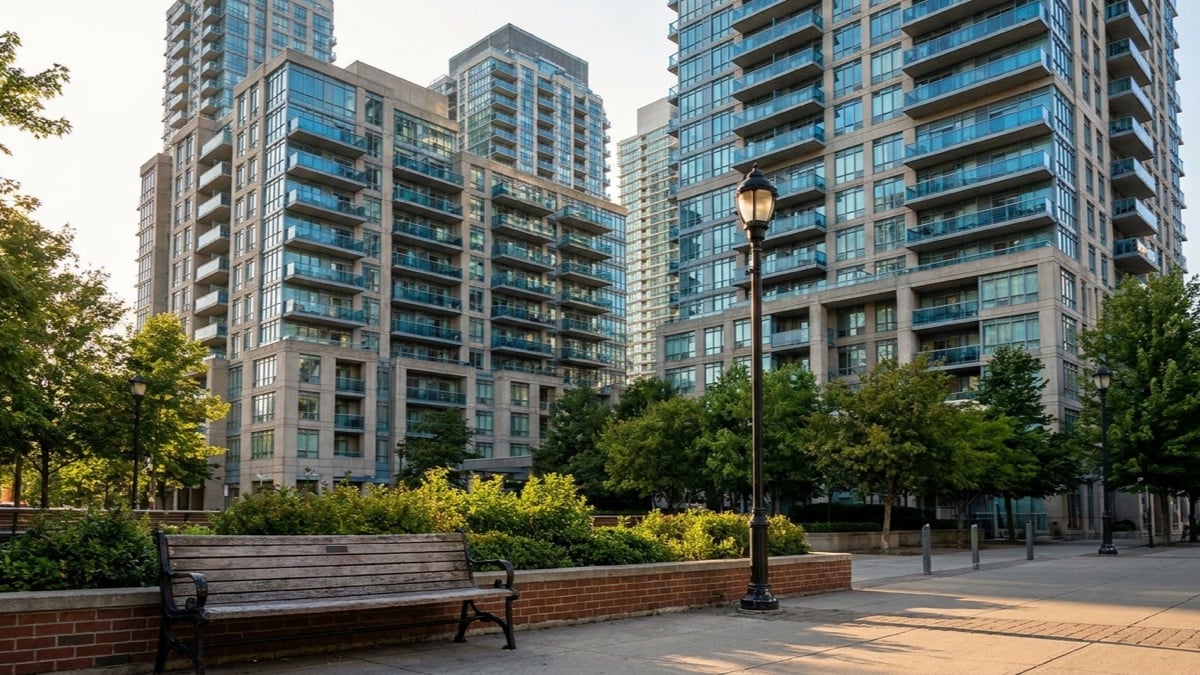
Featured image: AI-generated editorial illustration of downtown residential condominium towers above a tree-lined sidewalk. It does not depict a particular property.