

Groveland’s water, sewer and irrigation rates step up on December 1, 2026, by about 10 percent on every line of the residential schedule. The city froze the increase for 60 days after three water outages in September, so the higher rates first show up on the December bill that arrives in January 2027. One more step follows on October 1, 2027.
This is the third move in a four-step plan the Groveland City Council adopted in 2024. If you are buying in Groveland, the utility bill you see on a seller’s disclosure or a recent statement is not the bill you will pay. Below is the adopted schedule, what it does to a normal month, and why a large irrigated lot is where the increase actually bites.
What the adopted schedule charges after December 1
Groveland bills water, sewer and irrigation separately. Each service carries a flat monthly base charge that every residential customer pays regardless of use, plus a usage charge that climbs as consumption crosses tier boundaries. These are the figures on the city’s approved residential rate schedule.
| Monthly base charge | Now (since Oct 1, 2025) | From Dec 1, 2026 | From Oct 1, 2027 |
|---|---|---|---|
| Potable water | $11.04 | $12.14 | $13.35 |
| Sewer | $25.71 | $28.28 | $31.11 |
| Irrigation (separate meter) | $5.53 | $6.08 | $6.69 |
Base charges alone account for $46.50 a month from December 1 if a home carries all three services, against $42.28 today. The usage tiers sit on top of that.
| Usage charge per 1,000 gallons | Now | From Dec 1, 2026 | From Oct 1, 2027 |
|---|---|---|---|
| Water, 0 to 4,000 gallons | $1.82 | $2.00 | $2.20 |
| Water, 4,001 to 8,000 | $3.63 | $3.99 | $4.39 |
| Water, 8,001 to 12,000 | $4.24 | $4.66 | $5.13 |
| Water, more than 12,000 | $7.25 | $7.98 | $8.78 |
| Sewer, 0 to 8,000 | $5.81 | $6.39 | $7.03 |
| Sewer, more than 8,000 | $7.25 | $7.98 | $8.78 |
| Irrigation, 0 to 6,000 | $3.99 | $4.39 | $4.83 |
| Irrigation, 6,001 to 16,000 | $4.65 | $5.12 | $5.63 |
| Irrigation, 16,001 to 30,000 | $7.98 | $8.78 | $9.66 |
| Irrigation, 30,001 to 50,000 | $10.27 | $11.30 | $12.43 |
| Irrigation, more than 50,000 | $12.69 | $13.96 | $15.36 |
Both tables come from the approved monthly utility rate schedule the city publishes, marked effective December 1, 2026. One small inconsistency is worth knowing about if you compare documents: the city’s explainer page lists the new potable water base charge as $12.15, while the rate schedule itself shows $12.14 and states the increase as $1.10 over the current $11.04. The schedule is the document that adds up.
Why the increase landed in December instead of October
The earlier steps in this plan took effect on October 1. This one did not. After what the city describes as three back-to-back water outages in September 2026, the Groveland City Council imposed a 60-day freeze on the 2026 increase, covering what would have been the October and November bills. The city’s explanation of the rate plan states that customers will not see usage rates increase until the December bill, which arrives in January 2027.
The underlying plan dates to 2024, when the council adopted a tiered rate structure to pay for water infrastructure work: repairs, new facilities, a full renovation of an existing plant, pipe and water main replacement, and new equipment. Rates went up October 1, 2024, with further steps scheduled for 2025, 2026 and 2027. The city says the tiered structure was a condition of eligibility for Florida Department of Environmental Protection grant money, and that it has received more than $70 million in DEP grants toward the work to date.
For a buyer, the practical point is the timing. A seller’s November utility bill reflects rates that expire in nine days. A statement from January will be the first one that shows what the house actually costs to run.
A 6,000-gallon month, before and after
Take a household on city water and sewer with no separate irrigation meter, metering 6,000 gallons in a month. That volume crosses one water tier boundary and stays inside the first sewer tier. This example assumes sewer is billed on the same metered volume as water, which is the ordinary arrangement when there is no second meter; confirm it against an actual statement for the property.
| 6,000 gallons | Now | From Dec 1, 2026 | From Oct 1, 2027 |
|---|---|---|---|
| Water | $25.58 | $28.12 | $30.93 |
| Sewer | $60.57 | $66.62 | $73.29 |
| Monthly total | $86.15 | $94.74 | $104.22 |
December 1 adds $8.59 a month, or $103.08 over a year. By October 2027 the same month costs $18.07 more than it does today, $216.84 a year. That is not a number that changes whether a house is affordable, and it is a number worth putting in the carrying-cost column alongside taxes and insurance, because it is already adopted rather than speculative.
Notice how much of the bill is sewer. At 6,000 gallons, sewer is roughly 70 percent of the total, and the sewer base charge by itself is larger than the entire water bill. Cutting indoor water use helps less than most buyers expect, because the fixed portion does not move.
Where a large lot changes the arithmetic
Groveland’s draw is land. The Live Move Orlando Groveland corridor guide frames the city as the place where you trade commute time for a half-acre, an acre or more. The irrigation schedule is where that trade shows up on a bill, and it is the part of Groveland’s rate structure that behaves least like a flat utility.
The irrigation tiers are steep and they are not evenly spaced. At the December 1 rates, going from the second tier to the third raises the marginal price from $5.12 to $8.78 per 1,000 gallons, a jump of 71 percent, and that boundary sits at 16,000 gallons a month.
Area is what pushes a property across it. An inch of water spread over a quarter acre is about 6,800 gallons, and over a half acre about 13,600. Apply an inch twice in a dry month and the quarter-acre lawn finishes around 13,600 gallons, inside the second tier, while the half-acre lawn finishes near 27,200 and spends its last 11,000 gallons in the third.
Two irrigation months at the December 1 rates, on a separate irrigation meter:
- 8,000 gallons: $6.08 base, plus 6,000 gallons at $4.39 and 2,000 at $5.12, for $42.66.
- 20,000 gallons: $6.08 base, plus 6,000 at $4.39, 10,000 at $5.12 and 4,000 at $8.78, for $118.74.
Two and a half times the water costs just under three times as much, a difference of $76.08 in a single month. Run that through a Central Florida spring and the irrigation line can outweigh the entire water and sewer bill for the house. The same 20,000-gallon month costs $107.89 today and $130.61 once the October 2027 rates land.
The water schedule has a comparable step. Crossing from 4,000 to 4,001 gallons moves the marginal rate from $2.00 to $3.99, essentially doubling it, and above 12,000 gallons the rate reaches $7.98. A household irrigating off the potable meter rather than a separate irrigation meter will hit that top tier quickly.
What to confirm before the inspection period ends
- Whether the home is on city utilities at all. A Groveland mailing address is not proof of a city water account. Parts of the area are on private wells and septic systems, which carry no monthly utility bill and a different set of maintenance and inspection questions.
- Whether there is a separate irrigation meter. It changes which rate schedule applies to outdoor water and adds a third base charge. Ask the city whether irrigation volume on that meter is excluded from the sewer calculation for this address rather than assuming it.
- Twelve months of actual statements, not an average. A tiered structure means the spring and early summer bills are the ones that matter. A yearly average hides them.
- How much of the lot is actually irrigated turf. This is the single variable that decides which irrigation tier a property lives in, and it is the one you can change after closing.
- Current watering restrictions. Allowed irrigation days cap how much water a system can legally apply, which caps the tier the home can reach. Check the city’s posted restrictions as of your closing date, since they move with drought conditions.
- Deposit and account setup. The city’s utility billing department lists a $200 residential deposit plus a $50 service charge to open an account, and requires the warranty deed or closing disclosure. Budget it as a closing-week cost.
Frequently asked questions
When will I actually see the higher Groveland rate on a bill?
On the December bill, which the city says arrives in January 2027. Groveland bills monthly, mails statements by the third week, and makes them due the first of the following month. The December 1 effective date governs the usage period, not the date the envelope shows up.
Is this the last increase?
One more is scheduled. The city’s rate schedule carries a fourth column effective October 1, 2027, which it describes as the final planned increase under the 2024 plan. Those figures are in the tables above. Anything beyond October 2027 would require a new council action and is not on the adopted schedule.
Why is my sewer charge higher than my water charge?
Because Groveland prices them separately and sewer carries both the larger base charge and the higher first-tier usage rate. From December 1 the sewer base charge is $28.28 against $12.14 for potable water, and the first sewer tier runs $6.39 per 1,000 gallons against $2.00 for the first water tier. A household that cuts indoor use still pays the sewer base charge in full.
Does a bigger lot automatically mean a bigger water bill in Groveland?
Only to the extent the lot is irrigated. Acreage left in native vegetation, pasture or tree canopy draws no metered water. The cost follows irrigated turf and landscape beds, which is why two homes on identically sized lots can sit two tiers apart.
Where to go from here
If you are weighing Groveland against the rest of South Lake, start with the full corridor picture in the Live Move Orlando Groveland guide, then bring us the specific address. We will pull the utility history and the lot detail and tell you what the house costs to hold, not just what it costs to buy. Book a strategy session with our team at mvphomegroup.com/nelsoncruz.
If land use rather than utilities is the question on a Groveland property, our guide to the Green Swamp Area of Critical State Concern covers what can be built and where. For current pricing, see the Groveland housing market report. The rate figures here are the city’s adopted residential schedule as published on November 22, 2026, and they are not a quote for any particular account.
Nelson Cruz, P.A.
Founder & CEO
MVP Home Group, Real Broker LLC
Nelson brings nearly two decades in law enforcement to his work in real estate. View Nelson’s profile or contact our team at 407-901-9939 or [email protected].
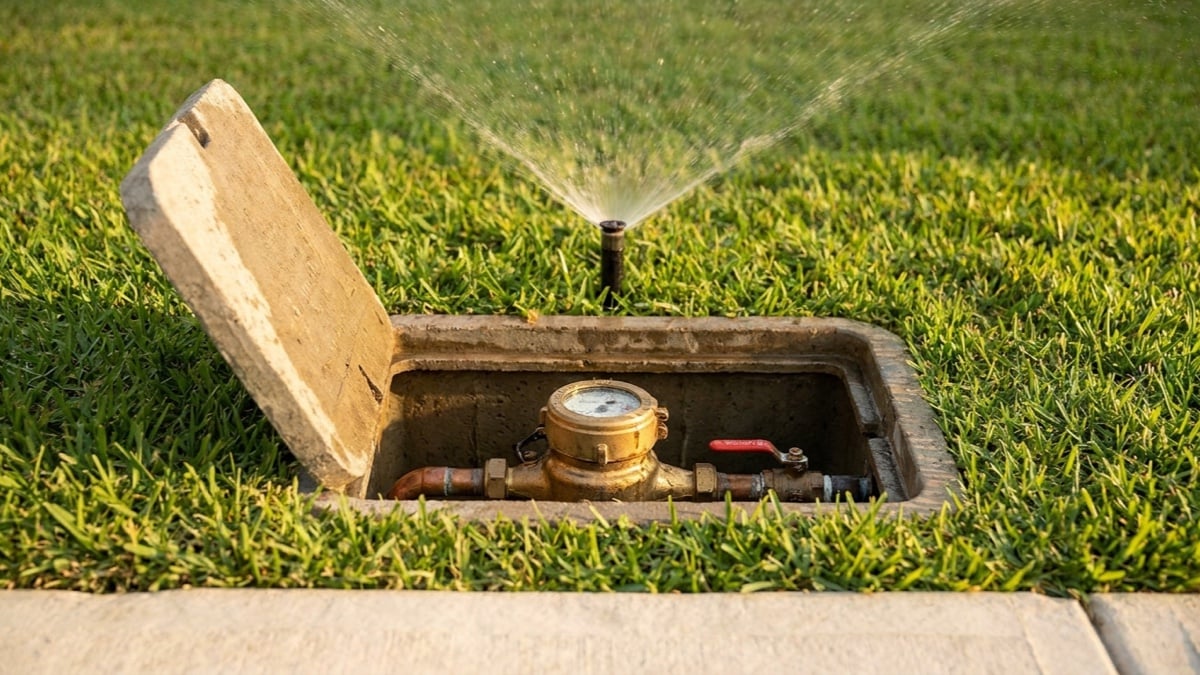
Featured image: AI-generated editorial illustration of an open concrete water meter box in a green residential lawn, with a brass municipal water meter, a shut-off valve and a lawn sprinkler spraying behind it. Not a particular property, street or neighborhood.