

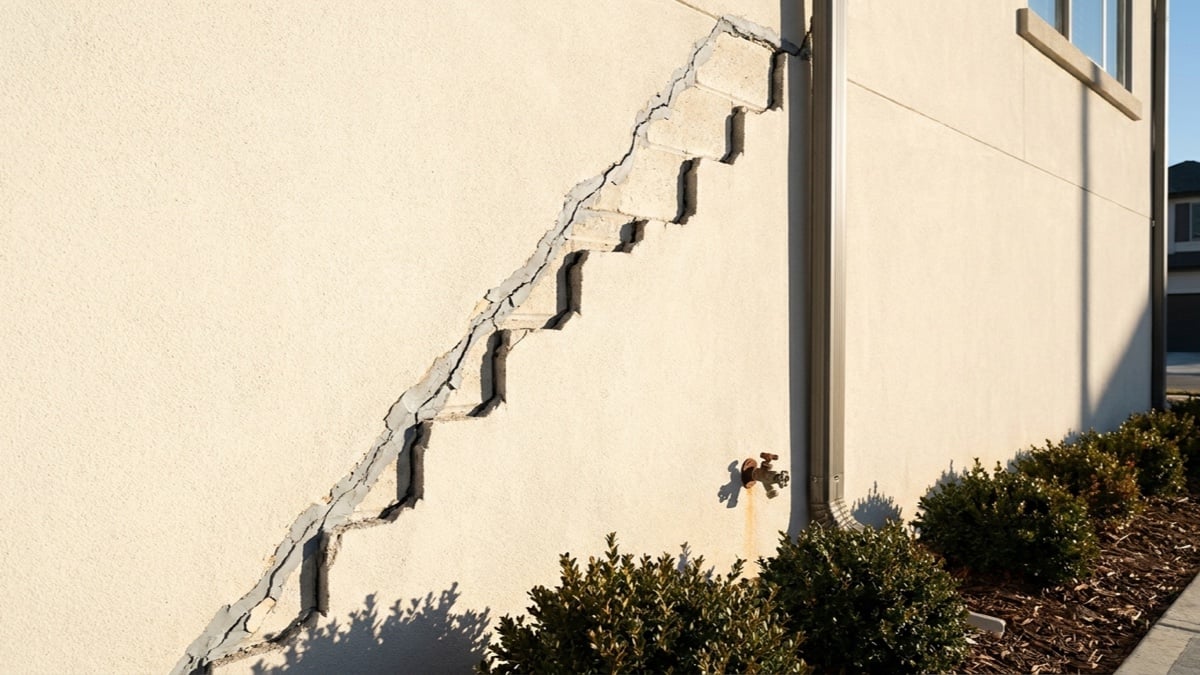
Florida puts two deadlines on a construction defect claim, and both are measured from the day the building department issued the certificate of occupancy. Neither one is measured from the day you buy the house. Section 95.11(3)(b) allows four years to file, running from discovery when the defect is hidden, and caps every claim at seven years from that certificate no matter when the problem surfaces. Chapter 558 then requires a written notice and a 60-day wait before any suit, and that notice does not pause the seven-year cap. On a house whose certificate was issued in early 2019, both windows are already shut.
Where the statute starts counting
Section 95.11(3)(b), Florida Statutes (2026), governs any action founded on the design, planning, or construction of an improvement to real property. The period is four years, and it runs from the date the authority having jurisdiction issues a temporary certificate of occupancy, a certificate of occupancy, or a certificate of completion, or from the date construction was abandoned if it was never finished. Whichever of those dates is earliest is the one that starts the clock.
Hidden problems get a different starting line. When the action involves a latent defect, the four years run from the time the defect is discovered or should have been discovered with the exercise of due diligence. That exception has a ceiling: the same paragraph states that in any event the action must be commenced within seven years after the earliest of those certificate or abandonment dates. A defect found in year eight carries no claim under this section, however well hidden it was.
Your closing date never enters the calculation
Nothing in the paragraph ties either period to a sale. The seven years that began at the certificate keep running through every listing, contract and closing in between, so a buyer inherits whatever remains of the original calendar rather than receiving a fresh one.
Repair work does not buy more time either. Where construction was performed under a duly issued permit and the jurisdiction issued one of those certificates, the statute provides that correcting or repairing completed work within the scope of that permit and certificate, whether performed under warranty or otherwise, does not extend the period for commencing an action. A builder who came back twice to patch the same wall has not reset anything.
A later owner is still a potential claimant. Section 558.002(3) defines a claimant as a property owner, expressly including a subsequent purchaser or an association, asserting a claim concerning a construction defect. Whether a particular claim holds against a particular party is a question for a construction attorney, and the dates above cap it either way.
Three certificate dates, three different answers
The arithmetic below applies the four-year and seven-year periods to three certificate of occupancy dates, measured against today. The final column is the last day the 60-day notice described in the next section could be served and still leave room to file inside the seven years.
| Certificate of occupancy | Four years from the certificate | Seven-year outer limit | Last day to serve the 60-day notice |
|---|---|---|---|
| March 12, 2019 | March 12, 2023, passed | March 12, 2026, passed | Passed |
| August 20, 2021 | August 20, 2025, passed | August 20, 2028 | June 21, 2028 |
| May 4, 2023 | May 4, 2027 | May 4, 2030 | March 5, 2030 |
The middle row is the one worth studying. A house a little over five years past its certificate has already run out the four-year period for a defect that was visible all along, while a genuinely latent defect discovered this month would still have time, bounded by August 2028. That last column is arithmetic rather than a plan, since nothing obliges the other side to respond quickly enough to make it work.
The 60 days you spend before you can file
Chapter 558 sits in front of the courthouse door. Section 558.003 provides that a claimant may not file an action subject to the chapter without first complying with it, and that on a timely motion the court shall stay an action filed without compliance until the claimant complies.
Section 558.004(1)(a) requires the claimant to serve written notice of claim at least 60 days before filing, or at least 120 days where an association represents more than 20 parcels, and the notice must refer to the chapter. Under 558.004(1)(b) the notice has to describe in reasonable detail the nature of each alleged defect and identify each location well enough for the responding party to find it without undue burden. A visual inspection is the stated basis, and the claimant has no obligation to perform destructive testing to prepare it.
The responses then run on their own schedule. The person served may inspect within 30 days under 558.004(2) and must answer in writing within 45 days under 558.004(5), either offering repair, money or a combination, disputing the claim, or stating that the insurer will decide within 30 days. A claimant who receives a timely offer has 45 days under 558.004(7) to accept or reject it.
Two sentences in the same section do opposite things, and the difference is the practical heart of this topic. Section 558.004(10) provides that serving the notice tolls the applicable statute of limitations. Section 558.004(1)(d) provides that the notice shall not toll any statute of repose period under chapter 95. The four-year clock pauses while the process runs. The seven-year clock does not.
What has to be wrong for any of this to apply
Section 558.002(5) reaches four routes: defective materials, products or components; a code violation giving rise to a cause of action under section 553.84; a design that failed professional standards of care at the time of governmental approval; and a failure to build to accepted trade standards for good and workmanlike construction.
That second route carries its own limit. Section 553.84 creates a civil action for a material violation of the Florida Building Code, meaning a violation in a completed building which may reasonably result, or has resulted, in physical harm to a person or significant damage to the performance of a building or its systems. The section then withdraws itself in a common situation: where the permits were obtained, the plans were approved, the project passed all required inspections, and no injury or outside property damage occurred, it does not apply unless the party knew or should have known the violation existed.
Find the certificate date before your inspection period ends
The date that governs both clocks sits with whichever authority issued the certificate, so identifying that authority comes first. A home inside city limits was permitted by the city and a home in the unincorporated county by the county, a line we map for Winter Garden city limits against unincorporated Orange County.
Orange County publishes its records through Fast Track, and the county states that all of its search tools are available to anyone without a member services account. Properties (Address or Parcel) and Permit Search (all types) are the two that matter here, and the property search asks you to pass an image check before returning results. Lake County Building Services serves only unincorporated areas. Its stated method is to look the address up on the Lake County Property Appraiser site and read the Millage Group and City fields: if a city is named, that city’s building department holds the file, and county records go through the county’s public records portal.
Work through this while the inspection period is still open:
- Get the certificate of occupancy date in writing from the issuing jurisdiction rather than relying on the year built on a listing or a property appraiser card.
- Measure that date against four years and seven years before deciding how much weight your inspection carries.
- Pull the permit history for the address, including sub-permits and final inspections, and confirm each permit closed. Our guide to open and expired permits in Florida covers what an unclosed permit signals.
- Ask the seller for any builder warranty document, any defect notice served on the builder, and any repair records. Florida’s one-year builder warranty under section 553.837 runs from the initial conveyance or occupancy, and 553.837(4) states it may not be construed to extend the statute of repose.
- Take a specific concern to a Florida construction attorney early, since the seven-year cap does not pause for the mandatory notice period.
Frequently Asked Questions
The seller says the builder already fixed this. Does that restart the clock?
No. Section 95.11(3)(b) states that where work was performed under a duly issued building permit and the jurisdiction issued a temporary certificate of occupancy, a certificate of occupancy, or a certificate of completion, correcting or repairing completed work within the scope of that permit and certificate does not extend the period, whether the work was done under warranty or otherwise. Repair records are still worth collecting, because they document the condition and its history.
I am buying a five-year-old home. Can a later owner bring a claim at all?
Section 558.002(3) includes a subsequent purchaser within the definition of a claimant for the chapter’s notice and repair process. That answers who may use the procedure, not whether a given claim succeeds against a given builder, subcontractor, supplier or design professional, which turns on facts a construction attorney has to evaluate. The periods in section 95.11(3)(b) cap it either way.
My building is one of several in the same project. Whose date applies?
Yours. Section 95.11(3)(b) provides that where the improvement consists of multiple buildings, each building is considered its own improvement for purposes of determining the limitations period. The certificate issued for your building is the one that counts.
The answer for any particular house comes from the issuing jurisdiction’s own record for that address. To talk through a specific property before your inspection period closes, book a strategy session at mvphomegroup.com/nelsoncruz.
Nelson Cruz, P.A.
Founder & CEO
MVP Home Group, Real Broker LLC
Nelson brings nearly two decades in law enforcement to his work in real estate. View Nelson’s profile or contact our team at 407-901-9939 or [email protected].
Sources: ss. 95.11(3)(b), 553.84, 553.837 and ch. 558 (ss. 558.002, 558.003, 558.004), Florida Statutes (2026), read at the Florida Legislature’s Online Sunshine on November 13, 2026; Orange County Fast Track online services and Properties (Address or Parcel) search page; Lake County Building Services department page. Dates in the table are arithmetic applied to hypothetical certificate of occupancy dates and are not figures for any particular property. This article explains statutory deadlines and is not legal advice.