

An FHA appraiser does not arrive with a wish list. HUD Handbook 4000.1 limits required repairs to the work needed to maintain the safety, security and soundness of the property, preserve its continued marketability, and protect the health and safety of the occupants. The appraiser reports the deficiency, estimates the cost to cure and photographs it. Your buyer’s lender then decides which of those repairs the loan actually requires.
What the appraiser is required to look at
FHA calls its property rules Minimum Property Requirements and Minimum Property Standards. Handbook 4000.1, last revised August 12, 2026, states that those standards “form the basis for identifying the deficiencies of the Property that the Appraiser must note within the appraisal report.”
Part of the visit is hands-on. The appraiser operates the plumbing, heating and electrical systems, flushes toilets, runs a sample of faucets and switches, checks the water heater for a temperature and pressure-relief valve with piping, and looks for frayed or exposed wiring. A system that appears damaged or does not function gets the appraisal conditioned for repair or further inspection.
Age by itself is not a defect. The handbook is explicit that an element functioning well and not at the end of its useful life should not draw a replacement recommendation because of age. A twenty-year-old water heater that works and vents safely is not a required repair.
The buyer is using an FHA loan. What repairs will I have to make?
The repairs that stop a closing are the ones tied to health, safety, soundness and marketability. Each item below comes from the handbook text.
- Roof. The covering has to keep moisture out and have a remaining physical life of at least two years. If the roof has less than two years of life left, the appraiser must report it and make the appraisal subject to inspection by a professional roofer.
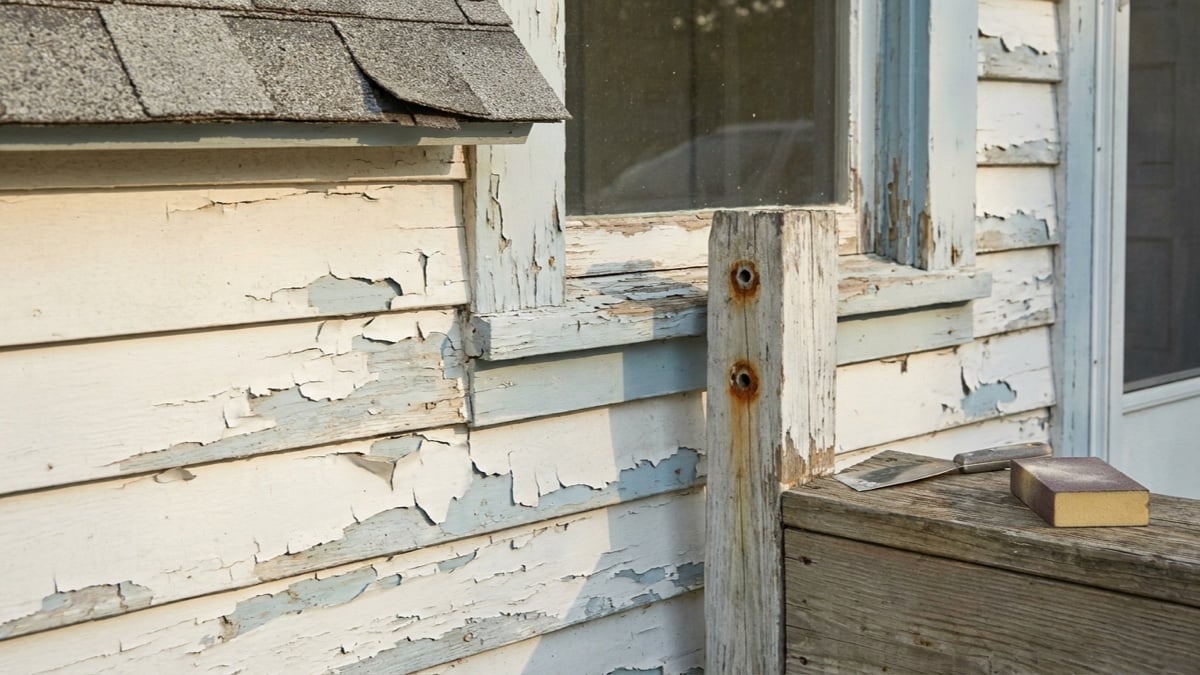
- Defective paint on a house built before 1978. Cracking, scaling, chipping, peeling or loose paint must be noted and repaired, on interior and exterior surfaces including stairs, decks, porches, railings, windows, doors, fences, detached garages and storage sheds.
- Heat. A permanently installed system has to heat the living areas automatically to at least 50 degrees Fahrenheit, provide healthful and comfortable heat, and be safe to operate.
- Air conditioning. Central air is not required at all. Once it is installed, it has to work, and a dead system gets reported as deferred maintenance with a cost to cure.
- Septic. The appraiser visually observes the system for signs of failure or surface evidence of malfunction and calls for repair or further inspection when something is readily observable.
- Wood destroying organisms. Evidence of infestation, including notice of a prior treatment, makes the appraisal subject to inspection by a qualified pest control specialist.
The dividing line matters more than any single item, because the handbook also tells the appraiser what to leave alone.
| Condition | FHA treatment under Handbook 4000.1 |
|---|---|
| Missing handrail that poses a safety threat | Required repair |
| Missing handrail that does not pose a threat to safety | Listed as cosmetic, not required |
| Peeling exterior paint, house built 1977 | Required repair under the lead-based paint rule |
| Defective interior paint, house built 1985 | Listed as cosmetic, not required |
| Dripping faucet causing no damage | Listed as cosmetic, not required |
| Cracked window glass, holes in window screens | Listed as cosmetic, not required |
| Roof with less than two years of remaining life | Appraisal made subject to a professional roofer’s inspection |
Cosmetic items still get reported and still feed the appraiser’s condition rating, so leaving them undone costs you on the value line.
Peeling paint on an older house follows its own rulebook
For pre-1978 housing the handbook sends the repair to 24 CFR 200.810(c), the federal regulation on treatment of defective paint surfaces, and that regulation is narrower than most sellers expect.
Treatment means covering or removing the defective surface. Scraping and repainting counts as adequate treatment for defective paint spots. Washing and repainting without thorough removal or covering does not count. Machine sanding and open-flame methods such as propane or gasoline torches are prohibited outright. The regulation also provides an exit: treatment is not required if a lead-based paint inspector certified under the EPA procedures at 40 CFR part 745 finds the surface is not lead-based paint.
Who decides, and why changing lenders will not clear the list
The appraiser does not have the final word. The handbook states that “Regardless of the Appraiser’s suggested repairs, the Mortgagee will determine which repairs are required.” Your buyer’s lender is the decision maker, so the productive conversation is with that underwriter.
Ordering a fresh appraisal is not an escape route. FHA prohibits a lender from ordering an additional appraisal to achieve an increase in value or the elimination or reduction of deficiencies and repairs required. The handbook also contemplates a lender using an existing appraisal for a different borrower, so a deal that collapses over conditions can follow the house to the next FHA buyer.
Nothing in FHA’s rules obligates you to pay for the work. Your repair duty comes from the contract, which we covered in what Florida sellers must disclose on an AS IS sale. What FHA controls is whether the loan funds: the condition gets cured, the buyer finances it through FHA’s 203(k) rehabilitation program, which caps total rehabilitation costs at $75,000 on the Limited version, or the financing fails. Where the problem is value instead of condition, the path runs through what happens when a Florida appraisal comes in low.
Whether an FHA buyer can reach your price at all
FHA caps the base loan amount two ways, and a seller can check both before accepting an offer. Handbook 4000.1 sets the maximum loan-to-value on a purchase at 96.5 percent of Adjusted Value. Mortgagee Letter 2025-23, published December 11, 2025, set the 2026 limits for case numbers assigned on or after January 1, 2026, putting the national low-cost one-unit limit at $541,287, which is 65 percent of the $832,750 conforming limit.
HUD’s county file for calendar year 2026 puts Orange, Lake, Osceola and Seminole counties, all inside the Orlando-Kissimmee-Sanford metro, and Polk County in the Lakeland-Winter Haven metro at that same one-unit figure of $541,287.
On a single-family listing the practical ceiling lands near $560,900, because 96.5 percent of $560,919 equals $541,287. Below that price an FHA buyer with the minimum down payment stays inside the county limit. Above it the limit binds first and the buyer covers the gap in cash, which is worth knowing at the offer table.
What to handle before the appraiser arrives
- Judge the paint the way the regulation defines it, including the shed and the fence: cracking, scaling, chipping, peeling or loose.
- Confirm every stairway and elevated surface has its handrail.
- Leave the power and water on. An appraiser who cannot operate the systems may render the appraisal subject to reobservation, which the handbook warns can produce additional repair requirements.
- Run the heat and the air conditioning, check under sinks for leaks and damage, and confirm the water heater’s relief valve has piping on it.
- Pull the paperwork on any prior termite treatment and on roof age. Our notes on termite bonds and WDO inspections and on roof age when selling cover what those records need to show.
Questions sellers ask next
Can I simply refuse to make the repairs?
Yes. FHA’s required repairs are a condition of the buyer’s loan rather than a duty the agency imposes on you. Refusing means the buyer pays for the work, finds other financing or walks, and your contract governs the deposit question. The lender cannot order a second appraisal to make the conditions disappear, and the existing appraisal may be used for a different borrower, so the same list can greet the next FHA offer.
Does the FHA appraisal replace the buyer’s home inspection?
No, and HUD says so in the amendatory clause it requires in the sales contract: “HUD does not warrant the value or condition of the property. The purchaser should satisfy himself/herself that the price and condition of the property are acceptable.” That clause also releases the buyer from completing the purchase, without forfeiting the earnest money, unless the buyer receives a written statement of appraised value of at least the contract price.
The appraiser called for an inspection instead of a repair. What now?
Handbook 4000.1 directs the appraiser to make the appraisal subject to inspection by a qualified individual or entity when something suggests a safety, soundness or security issue beyond the appraiser’s ability to assess. A roofer, a pest control operator or a licensed trade produces that report, and the lender then decides what repair the loan requires. A clean report can close the condition without a dollar of work.
Where to go from here
An FHA offer arrives with a published rulebook attached, which makes its conditions predictable long before anyone orders an appraisal. Sellers on septic should read what a Florida septic inspection looks at, and anyone under contract can line this up against what the final walk-through obligates a seller to do.
If you are weighing an FHA offer or pricing a house an FHA buyer would need to reach, book a strategy session with our Central Florida team at mvphomegroup.com/nelsoncruz. We look at the roof, the paint age and the mechanical systems first, since those three decide most of what an FHA appraiser writes up. This is general information about federal program rules, not legal or lending advice, and your buyer’s lender controls the repair list on any specific file.
Nelson Cruz, P.A.
Founder & CEO
MVP Home Group, Real Broker LLC
Nelson brings nearly two decades in law enforcement to his work in real estate. View Nelson’s profile or contact our team at 407-901-9939 or [email protected].
Featured image: AI-generated editorial illustration of the exterior of an older house with badly cracking and peeling paint across the clapboard siding and window trim, a porch post with two empty bolt holes where a handrail was removed, a paint scraper and sanding block on a weathered wooden step, and worn asphalt shingles at the roof edge. No readable text, signage or logos. Not a particular property.