

Removing a protected tree on a single-family lot inside the City of Winter Park still requires a city tree-removal permit, and a notice posted on the city’s Urban Forestry page confirms that its review of that program has changed nothing yet. The permit is the cheap part. The city’s fee schedule effective October 1, 2026 charges $35.00 for a single-family residential permit and sets compensation for removing a protected tree at $110.00 per caliper inch at diameter at breast height, so a 24-inch tree carries $2,640. One statewide exemption can erase the permit, the fee and any replanting requirement, and it turns on signed documentation from a credentialed assessor rather than the owner’s own judgment.
Whose tree is it, and which city is it in
Winter Park reports more than 25,000 trees in city rights of way, so the tree in front of a Winter Park house is often a city tree rather than a yard tree. The city’s notice states that city authorization remains required for tree-removal work involving trees within the public right-of-way or on city property, separately from any permit question about trees on the lot itself.
Jurisdiction matters just as much. A Winter Park permit reaches property inside Winter Park city limits. The corridor our Live Move Orlando Winter Park guide covers spans Winter Park, Maitland and College Park, so a listing marketed under a Winter Park address is not automatically inside the city. The same problem in another West Orange town is worked through in our breakdown of what changes inside city limits.
What still requires a Winter Park permit
The city’s posted notice sets out the current position directly. Tree-removal permits continue to be required for protected trees on single-family residential properties, except where preempted by state law. The city is reviewing that residential program, any changes will be implemented on a date still to be determined, and there are no changes to requirements or enforcement at this time. The review does not touch permitting for duplexes, multifamily, commercial, institutional, mixed-use or other nonresidential properties.
Which trees count as protected is defined in the city’s land development code rather than on the permit page, so ask Urban Forestry which trees on the parcel are protected before planning work. That answer drives every number below. Applications run through the city’s permitting self-service portal, and staff perform a field inspection once the application is received.
The state exemption is a documentation standard
Florida law bars a local government from requiring a notice, application, approval, permit, fee or mitigation to prune, trim or remove a tree on residential property when the owner possesses documentation that the tree poses an unacceptable risk to persons or property, and bars it from requiring replanting afterward. Three conditions have to line up, and the statute defines all three.
- The property. A single-family detached building on a lot actively used for single-family residential purposes, as either a conforming use or a legally recognized nonconforming use.
- The credential. An onsite assessment performed under the procedures in Best Management Practices: Tree Risk Assessment, Second Edition (2017), by an arborist certified by the International Society of Arboriculture or a Florida licensed landscape architect, and signed by that person.
- The finding. That removal is the only means of practically mitigating the tree’s risk below moderate, determined under those same procedures.
A letter reporting that a tree is old, leaning or in poor condition does not meet that standard. The assessment has to reach the below-moderate finding, and the owner has to hold it before the work. See Fla. Stat. 163.045.
What the city charges, and where its numbers disagree
Two city documents publish tree fees and they do not match. The city-wide fee schedule effective October 1, 2026 is the fuller of the two. The Urban Forestry web page lists a shorter and partly different set.
| Item | Fee schedule effective Oct. 1, 2026 | Urban Forestry web page |
|---|---|---|
| Single-family residential tree removal permit | $35.00 | $35 |
| Non-residential or multi-family property | $100.00 | $100 |
| Reinspection of tree, second and third visits | $25.00 | $25 |
| Reinspection, each required visit after the third | $75.00 | Not listed |
| Request for appeals to Tree Preservation Board | $35.00 | $100 |
| Compensation for removing a protected tree | $110.00 per caliper inch dbh | $110 per caliper inch credited for planting |
The appeal fee differs by $65 between the two documents and the web page omits the $75.00 reinspection tier. The web page also lists a zone clearance charge at $100 per hour in its fee list while its own zone clearance paragraph states a rate of $150 per hour, and the city-wide schedule prices preparing trees around power lines at actual cost. Get the figure that applies to your permit in writing before you budget. All fees are non-refundable.
One more item to confirm rather than assume: both documents route appeals to a Tree Preservation Board, and the city’s own boards and commissions roster lists twenty boards without one by that name. If you expect to appeal, ask Urban Forestry which body hears it now and what the filing fee is.
What a protected tree costs to remove
Compensation runs $110.00 per caliper inch measured at diameter at breast height. Additional caliper inches planted reduce the tree trust fund deposit by $110 per caliper inch, and trees planted in lieu of compensation must be Florida #1 grade and a minimum of 3 inches in caliper. Failure to plant them within 30 days of removal results in the city billing the total inches owed plus a $150.00 administrative fee.
Run that on a 24-inch protected tree. Compensation is 24 inches at $110, or $2,640, and missing the planting window turns it into $2,790. Matching the tree inch for inch takes 24 caliper inches of new planting, or eight trees at the 3-inch minimum. How much of the deposit that returns depends on how many inches the code already requires, which the permit page does not state, so ask Urban Forestry for the net. The 30-day clock runs from removal rather than the permit date, so the planting has to be lined up before the saw arrives.
Power lines change the order of operations
The application asks whether power lines are involved, and Urban Forestry determines the line type from there. Where primary wire is involved, zone clearance has to be paid before the tree-removal permit is issued, which makes a tree near primary conductors a two-step approval with two payments. The city will clear a 10-foot radius around primary energized conductors, charged by the hour, and an owner may instead hire a qualified line clearance tree contractor. Secondary wire, service wire to the house and street light wire route to customer service at 877-811-8700 rather than through zone clearance.
What to settle before you close
- Confirm the parcel sits inside Winter Park city limits, since the surrounding corridor is not all one jurisdiction.
- Ask Urban Forestry which trees on the lot are protected, and which trees near the frontage stand in the right-of-way or on city property.
- Price a removal you actually intend as permit plus compensation plus replacement planting, rather than as a tree service quote alone.
- If you plan to rely on the state exemption, obtain the signed assessment first and read whether it makes the below-moderate finding. An assessment that stops short of it does not exempt the work.
- Ask whether trees were removed from the lot recently and whether the permit and any replacement planting were completed, since unfinished obligations attach to the property. That is the same exposure covered in our guides to open and expired permits and to right-of-way rules on an unpaved lane.
Frequently asked questions
Do I need a permit to remove a tree in my own Winter Park yard?
For a protected tree on a single-family residential property inside the city, yes, unless the statewide risk-documentation exemption applies. The city’s Urban Forestry page states that its review of the residential program has not changed requirements or enforcement. Which trees qualify as protected is set by the city’s land development code, so confirm the specific trees with Urban Forestry.
My arborist says the tree is dangerous. Does that waive the permit?
Only where the documentation meets the statutory standard: an onsite assessment under Best Management Practices: Tree Risk Assessment, Second Edition (2017), performed and signed by an ISA-certified arborist or a Florida licensed landscape architect, finding that removal is the only means of practically mitigating the tree’s risk below moderate. The exemption also reaches only a single-family detached home actively used as one. A general opinion that a tree is hazardous does not satisfy the test.
What does it cost to take down a protected tree in Winter Park?
The permit is $35.00 for single-family residential under the fee schedule effective October 1, 2026. Compensation is $110.00 per caliper inch at diameter at breast height, which is $2,640 on a 24-inch tree. Additional caliper inches planted reduce the tree trust fund deposit by $110 per caliper inch, and trees planted in lieu of compensation must be Florida #1 grade and at least 3 inches in caliper. Planting later than 30 days after removal adds a $150.00 administrative fee. Tree service labor is separate.
Where to go from here
If you are still weighing the corridor itself, start with the full corridor guide at Live Move Orlando’s Winter Park guide, which compares the area against its neighbors. This article takes one decision inside it that the guide does not price.
When you want the canopy, the mitigation exposure and the offer handled as one decision, book a strategy session with our team at mvphomegroup.com/nelsoncruz. A protected tree that has to come out is a number you can put on paper before closing, and a number on paper is negotiating material in a way that a vague worry about the yard never is.
Nelson Cruz, P.A.
Founder & CEO
MVP Home Group, Real Broker LLC
Nelson brings nearly two decades in law enforcement to his work in real estate. View Nelson’s profile or contact our team at 407-901-9939 or [email protected].
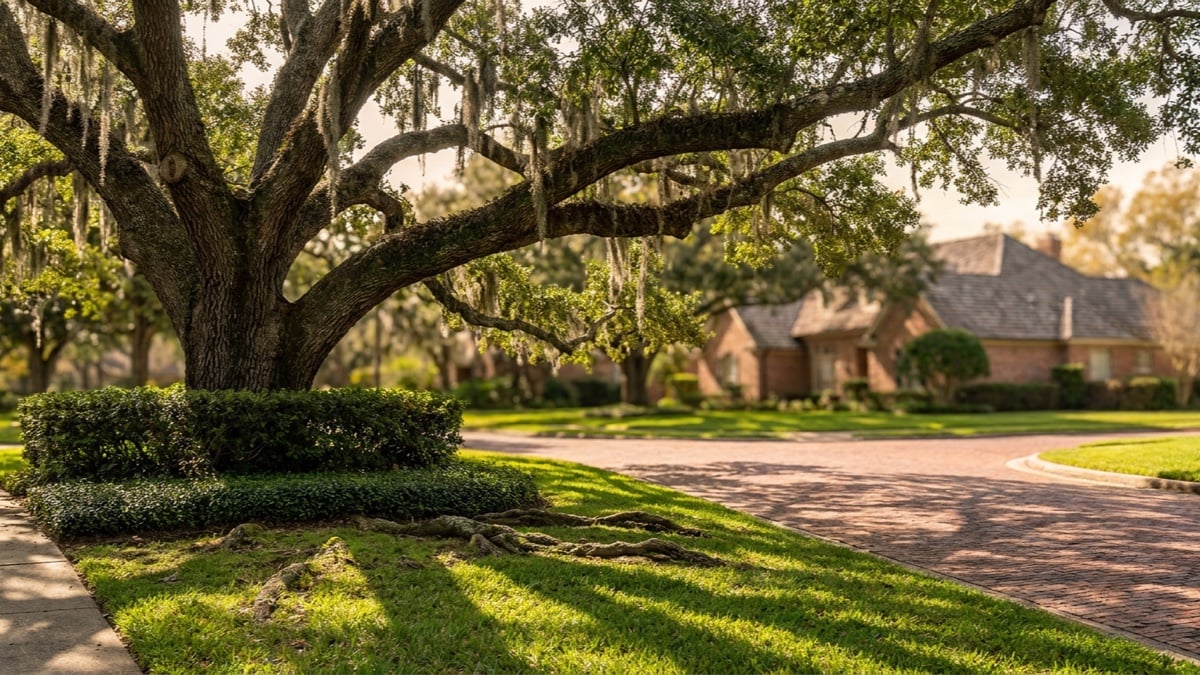
Featured image: AI-generated editorial illustration of a large mature live oak with a broad moss-draped canopy and exposed surface roots on a mown front lawn beside a brick residential street. Not a particular property or address.