

The walk-through has one contractual job. Paragraph 12(b) of the Florida AS IS contract sends you through the house to confirm that the personal property is still there and that the seller kept the property in the condition it was in on the Effective Date. Where the seller fell short, Paragraph 9(a) already supplies the remedy: 125 percent of the estimated cost to meet that standard is escrowed at closing, the seller pays any actual cost above the escrow, and the unused balance goes back to the seller.
The one job the walk-through has
Paragraph 12(b) of the FloridaRealtors/FloridaBar AS IS Residential Contract for Sale and Purchase, form ASIS-7x Rev. 12/26, is headed WALK-THROUGH INSPECTION/RE-INSPECTION. It sets the window as the day prior to Closing Date, or on Closing Date prior to time of Closing, as specified by Buyer, and it permits a follow-up walk-through if necessary. The purpose clause is deliberately narrow: solely to confirm that all items of Personal Property are on the Property and to verify that Seller has maintained the Property as required by the AS IS Maintenance Requirement and has met all other contractual obligations.
Cancellation rights sit earlier in the same paragraph and run on a different clock. Paragraph 12(a) gives the buyer an Inspection Period, which is 15 days after Effective Date when the blank is left empty, and a right to terminate in the buyer’s sole discretion before it expires. Once that period passes without a termination notice, the buyer accepts the physical condition of the Property and any violation of governmental, building, environmental, and safety codes, restrictions, or requirements, subject to the seller’s continuing AS IS Maintenance Requirement. Repairs and improvements required by the buyer’s lender fall on the buyer.
The condition the seller has to hand over
Paragraph 11 states the standard in one sentence. Except for ordinary wear and tear and Casualty Loss, Seller shall maintain the Property, including, but not limited to, lawn, shrubbery, and pool, in the condition existing as of Effective Date. The contract names that duty the AS IS Maintenance Requirement.
Two features of that sentence settle most walk-through arguments. Its benchmark is the Effective Date, which Paragraph 3(b) fixes as the date when the last one of the Buyer and Seller has signed or initialed and delivered the offer or final counter-offer, so the comparison runs against the house as it stood when the contract came together rather than against a standard of good repair. Ordinary wear and tear and Casualty Loss are carved out, and that second exception moves fire and storm damage to a separate clause. A green pool and a dead lawn sit inside the requirement, because the paragraph names lawn, shrubbery and pool by hand.
The escrow the contract already gives you
The remedy is filed somewhere few buyers look, inside Paragraph 9(a), the list of costs to be paid by the seller. Its closing lines read: if, prior to Closing, Seller is unable to meet the AS IS Maintenance Requirement as required by Paragraph 11, a sum equal to 125% of estimated costs to meet the AS IS Maintenance Requirement shall be escrowed at Closing. Two sentences finish the mechanism. Where actual costs exceed the escrowed amount, the seller pays those actual costs. Any unused portion of the escrowed amount returns to the seller.
No dollar ceiling appears anywhere in that clause. Take an illustrative $450,000 purchase price and a $4,000 written estimate to replace a failed pool pump and resod a dead lawn. The escrow is $5,000, and a final bill of $7,000 leaves the seller owing the $2,000 difference on top of it. Because that figure is built on an estimate, get the estimate in writing before closing day rather than during the walk-through.
Storm and fire damage run on a different track
STANDARD M, titled RISK OF LOSS, governs damage after the Effective Date and before closing, which the contract calls Casualty Loss. Where the cost of restoration, including the cost of pruning or removing damaged trees, does not exceed 1.5% of the purchase price, restoration is the seller’s obligation and closing proceeds under the contract. Unfinished restoration at closing is escrowed at 125% of the estimated cost to complete, and that escrow may not exceed 1.5% of the purchase price. The seller’s duty to pay actual costs above the escrow carries the same 1.5% ceiling.
Above that line the structure changes and the choice becomes the buyer’s. Where the cost of restoration exceeds 1.5% of the purchase price, the buyer elects either to take the property as is together with the 1.5%, or to receive a refund of the deposit, which releases both parties from the contract.
| What the walk-through turns up | Clause that governs it | Result on an illustrative $450,000 price |
|---|---|---|
| Pool pump failed and the lawn died, $4,000 estimate | Paragraph 11 maintenance duty, escrowed under Paragraph 9(a) | $5,000 escrowed at closing, with no cap. A $7,000 final bill leaves the seller owing $2,000 more. |
| Storm damage, $6,000 restoration estimate | STANDARD M, below the 1.5% line | 125% of the estimate is $7,500, so the escrow is capped at the 1.5% figure of $6,750. |
| Storm damage, $9,000 restoration estimate | STANDARD M, above the 1.5% line | Buyer elects the property plus $6,750, or a refund of the deposit and release. |
Missing appliances answer to an earlier date
Personal property comes first in the Paragraph 12(b) purpose clause, and Paragraph 1(d) is the list. Absent a change by the parties, the purchase includes range(s)/oven(s), refrigerator(s), dishwasher(s), disposal, ceiling fan(s), light fixture(s), drapery rods and draperies, blinds, window treatments, smoke detector(s), garage door opener(s), thermostat(s), doorbell(s), television wall mount(s) and television mounting hardware, security gate and other access devices, mailbox keys, and storm shutters/storm protection items and hardware.
The measuring date moves here, and the shift is easy to miss. Those items are included where owned by Seller and existing on the Property as of the date of the initial offer, which can precede the Effective Date on any deal that ran through counter-offers. The same paragraph adds that Personal Property is included in the Purchase Price, has no contributory value, and shall be left for the Buyer, closing off the argument that a removed refrigerator was never paid for. Read the Paragraph 1(e) exclusions before claiming anything is missing.
If the seller will not make it right
Paragraph 15(b) governs seller default. The buyer may elect to receive return of the deposit without thereby waiving any action for damages resulting from the seller’s breach, and may seek to recover those damages or seek specific performance under Paragraph 16. Paragraph 15 survives Closing or termination of the contract, so signing at the table does not extinguish the claim.
Walking away from the closing table is the heavier move and belongs with your attorney. Paragraph 15(a) hands the seller a mirror remedy, letting the seller elect to recover and retain the deposit as agreed upon liquidated damages where the buyer fails, neglects or refuses to perform within the times specified. How a contested deposit then gets decided is covered in who rules when a seller will not release your deposit.
What to do in the walk-through hour
- Book it for the day before the Closing Date and ask in writing for the utilities to be on. STANDARD L obliges the seller, upon reasonable notice, to provide utilities service and access to the property for appraisals and inspections, including a walk-through or follow-up walk-through prior to closing.
- Bring your Inspection Period report and any photographs taken around the date of the offer. The comparison is to a documented earlier condition, so undated memory carries little weight.
- Work the Paragraph 1(d) list item by item, including anything typed into its blank, then check the Paragraph 1(e) exclusions.
- Run what has to run: heating and cooling at the thermostat, every included appliance, the water heater, the garage door opener, pool equipment, irrigation and the smoke detectors.
- Get a written repair estimate the same day when something has failed, since the Paragraph 9(a) escrow is calculated from an estimate.
- Put the finding in writing to your agent and the closing agent before closing, because the escrow has to be established at closing rather than arranged afterward.
- Use the follow-up walk-through that Paragraph 12(b) allows when the seller is still finishing the work.
Frequently asked questions
Can I cancel the contract at the walk-through?
Paragraph 12(b) creates no termination right. Cancellation lives in Paragraph 12(a) and expires with the Inspection Period, which is 15 days after Effective Date when the blank is left empty. After it lapses the buyer has accepted the physical condition of the property, subject to the seller’s continuing AS IS Maintenance Requirement, and a maintenance failure is handled by the Paragraph 9(a) escrow or pursued as a default under Paragraph 15. Refusing to close instead puts the deposit at risk under Paragraph 15(a), so take that route on your attorney’s advice. The earlier cancellation right is covered in can you back out after the home inspection in Florida.
Does the seller have to leave the utilities on for the walk-through?
Yes, on reasonable notice. STANDARD L requires the seller to provide utilities service and access to the property for appraisals and inspections, including a walk-through or follow-up walk-through if necessary, prior to closing. A dark house with no water cannot verify what Paragraph 12(b) asks you to verify, so give written notice and reschedule rather than signing off on an untested property.
What if I find the problem after closing instead?
Paragraph 15 survives Closing or termination of the contract, so the claim outlives the closing table, and Section 95.11(2)(b), Florida Statutes, allows five years for an action founded on a written instrument. Proof is what gets harder once the keys change hands, since the condition on the Effective Date then has to be established from records rather than observed. That is the argument for a documented walk-through and dated photographs. This is general information rather than legal advice.
Where to go from here
The walk-through tests the house against a dated condition and a named list, so the preparation decides what you can claim in that hour. The cancellation right that comes months earlier is covered in backing out after the home inspection in Florida. Whether a closing-week credit moves your date turns on which loan changes delay a Florida closing by three days, and the funding side of the same morning runs on how late you can wire your Florida closing funds. Sellers weighing the condition duty behind these questions can start with what Florida sellers must disclose on an AS IS sale.
If you have a closing date set and want the walk-through planned against your own contract, book a strategy session with our Central Florida team at mvphomegroup.com/nelsoncruz. We pull your Effective Date and your Paragraph 1(d) list first, since those two things decide what the walk-through can actually claim. This is general information about Florida contract forms and Florida statutes, not legal advice, and it does not replace your own counsel or your closing agent’s written instructions.
Nelson Cruz, P.A.
Founder & CEO
MVP Home Group, Real Broker LLC
Nelson brings nearly two decades in law enforcement to his work in real estate. View Nelson’s profile or contact our team at 407-901-9939 or [email protected].
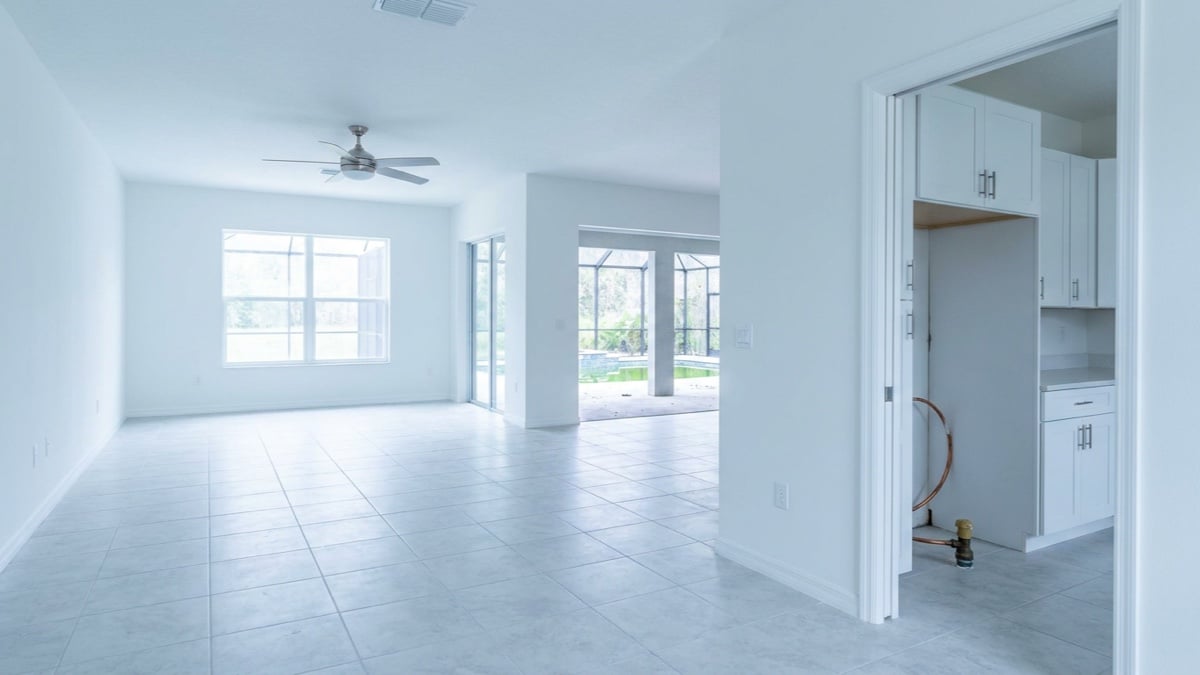
Featured image: AI-generated editorial illustration of an emptied house at a pre-closing walk-through, with bare tile floors, bare untreated windows, a ceiling fan and an open slider onto a screened lanai with a debris-strewn deck and a green-tinged pool. Through a side doorway, a kitchen cabinet gap where a refrigerator has been removed leaves its copper water line coiled and capped at the valve. No readable text, signage or logos. Not a particular property.