

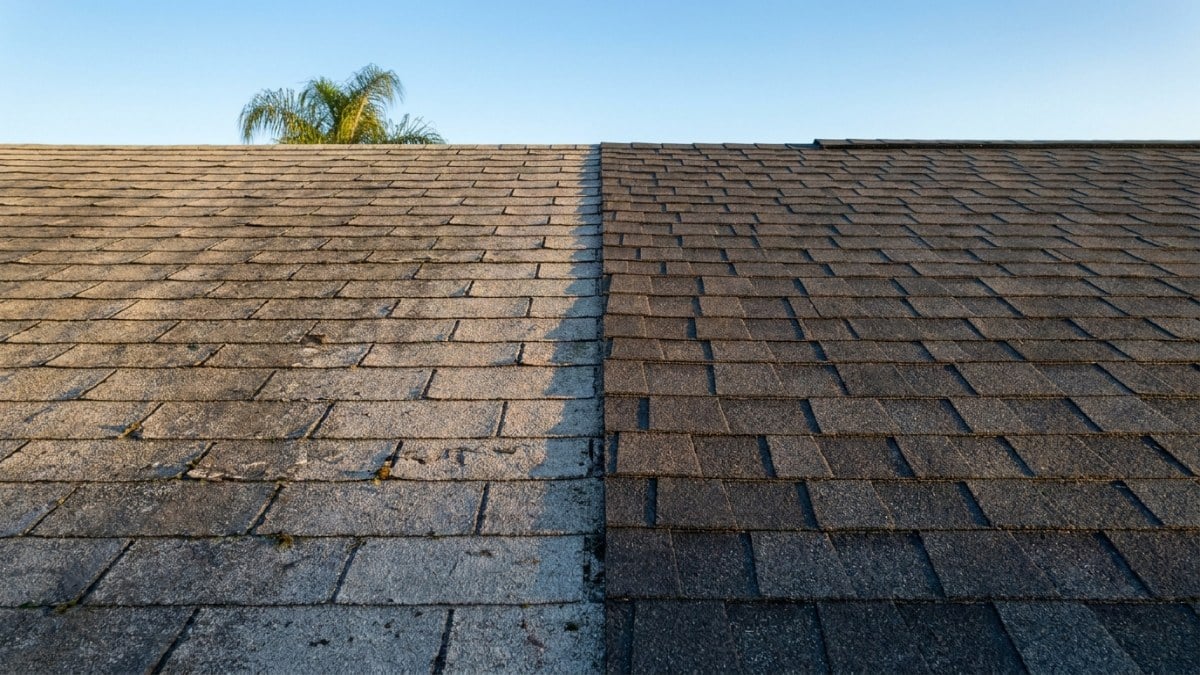
Can a 15- or 20-year-old roof keep a Florida home from selling or closing?
It can stall the closing, but it rarely has to kill it. Florida law bars insurers from refusing a policy solely because of roof age when the roof is under 15 years old, and for roofs 15 and older it gives the homeowner the right to an inspection showing five or more years of useful life. Citizens Property Insurance requires a four-point inspection on any home more than 20 years old and roof documentation once a shingle roof passes 25 years. A sale falls apart at this point when nobody checked the roof’s permit history before the buyer’s insurance quote.
If your roof dates from the 2000s, it is going to come up. Not at the showing. At the insurance quote, when the buyer’s carrier asks for a roof inspection or declines to write the policy.
That is the point where an older-roof sale gets renegotiated or cancelled. The fix is knowing the rules before you list, and having the paperwork ready before anyone asks.
What Florida law actually says about roof age
Two sets of rules matter, and they are not the same.
The statute. Florida Statute 627.7011(5) sets the floor for every insurer writing homeowners policies in the state:
- A carrier “may not refuse to issue or refuse to renew a homeowner’s policy insuring a residential structure with a roof that is less than 15 years old solely because of the age of the roof.”
- For a roof that is at least 15 years old, the insurer “must allow a homeowner to have a roof inspection performed by an authorized inspector at the homeowner’s expense” before requiring replacement, and it may not refuse to issue or renew solely because of roof age if that inspection shows “5 years or more of useful life remaining.”
Read that carefully. Under 15, age alone isn’t a valid reason to decline. At 15 and over, you aren’t automatically declined, but the burden shifts to you to prove the roof has life left, and you pay for the proof.
Citizens’ underwriting rules. Citizens Property Insurance Corporation, the state-created insurer, layers its own requirements on top:
- A four-point inspection (roof, electrical, plumbing, and HVAC) “for all property owner, dwelling and mobile home applications for properties more than 20 years old.”
- Roofs older than 25 years for shingle and other soft materials, or 50 years for tile, slate, concrete, or metal, need documentation of at least five years of remaining useful life. The property owner pays for that inspection.
- Proof a roof was replaced is a finalized roof permit or a paid-in-full roofing contract, work order, or receipt.
- When part of a roof has been replaced, “the roof age will be based on the oldest part of the roof.”
Those Citizens rules took effect May 1, 2023 for new business and September 1, 2023 for renewals, and they’re still the standard in 2026.
Private carriers set their own thresholds inside the statute’s floor, and they vary. Two buyers can get two different answers on the same roof because their quotes came from different carriers.
Where the deal breaks: the insurance binder
An insurance binder contingency sits alongside inspection, appraisal, and financing on the contracts I write in Central Florida, and a financed buyer has to bring a bound homeowners policy to the closing table. No policy, no closing.
Here’s the sequence on older-roof listings:
- The buyer goes under contract, orders the general inspection, and gets a roof age estimate from the inspector.
- The buyer’s insurance agent quotes the home. If the roof is 15 or older, the carrier can ask for a roof inspection. If the home is more than 20 years old and the quote is from Citizens, the four-point is mandatory.
- The inspector’s remaining-life number decides everything. Five years or more and the policy binds. Less than five and the buyer is looking at replacement quotes, and you’re looking at a repair request, a credit, or a cancellation.
The timing hurts because it lands after the buyer has already paid for inspections and started the appraisal. Both sides have money in the deal by then.
Meanwhile, you’re competing. As of September 6, 2026, Winter Garden and Oakland together have 659 homes listed for sale between $200,000 and $2 million, with a median asking price of $579,000 and 45 new listings in the past week. Ocoee has 122 at a $450,000 median, and Clermont has 578 at $479,000. Those are active-listing asking prices from MLS data via Ylopo, not sold prices, and they move daily. The point stands: a buyer who hits a roof problem on your house has plenty of other houses to look at.
How to prove your roof’s age before anyone asks
The single most useful thing an older-roof seller can do before listing is pull the permit. A finalized roof permit is the document Citizens accepts as proof of replacement, and it ends the “how old is it really” argument with any carrier. Buyers should do the same thing before writing an offer; it’s the one item on the list of things not to skip when buying that costs nothing.
Where to look depends on which jurisdiction issued the permit:
- Inside Winter Garden city limits: the City of Winter Garden Building Division’s BS&A Online portal. Search by property address, open the record, and look for the roofing permit and its final inspection.
- Unincorporated Orange County, including most of Horizon West: Orange County Fast Track (fasttrack.ocfl.net). The county requires a permit for roof replacement, so a legitimate re-roof leaves a record.
- Inside Clermont city limits: the City of Clermont’s eTRAKiT permit search.
- Unincorporated Lake County and county-issued permits: Lake County’s permit search by address.
What you’re looking for is a roofing permit with a passed final inspection. A permit that was issued but never finaled is a problem on its own: Citizens wants a finalized permit, and a buyer’s inspector or title company can flag an open permit. If you replaced the roof and the contractor never closed the permit, fix that before you list, not during the contract.
If there’s no permit at all and you have a paid-in-full contract or receipt from the roofer, keep it in your listing file. Citizens accepts that as an alternative.
Two more rules to know while you’re in the records:
- Partial replacements don’t reset the clock. Citizens ages the roof by its oldest section. If a storm claim replaced the back slope in 2019 and the front is original from 2004, the roof is a 2004 roof for underwriting.
- The 25 percent rule changed for newer roofs. Under Florida Statute 553.844(5), if a roof was built or replaced under the 2007 Florida Building Code or later and 25 percent or more of it is being repaired or replaced, only the repaired portion has to meet the current code. Roofs that predate the 2007 code don’t get that treatment, which is one reason a repair on a 1990s roof can turn into a full replacement.
Replace, certify, or price it in
Once you know the real age and the permit status, you have three honest choices. I walk sellers through all three, and the right answer depends on the roof, the price point, and how fast you need to move.
Replace before listing. This is the cleanest path on a roof that’s 20-plus and showing wear, and it’s the one pre-sale improvement that removes an objection instead of adding a feature. A new roof brings something else with it: Florida Statute 627.0629 requires every residential property insurance rate filing to include “actuarially reasonable discounts, credits, or other rate differentials” for construction features that reduce windstorm loss. A wind mitigation inspection on a new roof documents those features, and the buyer’s lower premium becomes part of your marketing. The cost is real, and you won’t recover every dollar in price. You’ll recover it in fewer failed contracts.
Certify and disclose. On a roof that’s 15 to 25 years old and in good condition, pay for the roof inspection yourself before listing. If it comes back with five or more years of useful life, you have the document the statute says insurers must honor, and you can hand it to every buyer’s insurance agent on day one. If it comes back short, you found out on your timeline instead of the buyer’s.
Price it in and say so. Some sellers can’t or won’t replace. That’s a legitimate choice as long as the listing reflects it. Disclose what you know about the roof, price against comparable sales with similar roof ages rather than against new-roof comps, and expect buyers to build replacement cost into their offers. What doesn’t work is listing at a new-roof price and hoping the insurance question never comes up. It comes up.
One piece of good news for whoever ends up insuring the home: the Florida Office of Insurance Regulation approved a statewide average Citizens rate decrease of 8.7 percent that began reaching policyholders at renewal in spring 2026, and Citizens’ own December 2025 rate announcement projected its policy count falling from a peak of 1.42 million in October 2023 to roughly 385,000 by the end of 2025 as private carriers took policies back. Rates are easing. Roof rules are not.
Frequently Asked Questions
Can an insurance company deny coverage in Florida because my roof is 15 years old?
Not solely because of age. Florida Statute 627.7011(5) says a roof under 15 years can’t be declined on age alone, and for roofs 15 and older the insurer must allow you to have an authorized inspector evaluate it at your expense. If the inspection shows five or more years of useful life remaining, the carrier can’t refuse to issue or renew solely because of roof age.
Does Citizens require a new roof at 20 years?
No. Citizens requires a four-point inspection for properties more than 20 years old. Its roof documentation requirement applies to shingle roofs older than 25 years and tile, metal, slate, or concrete roofs older than 50, and what it wants at that point is proof of at least five years of remaining useful life, not necessarily a replacement.
How do I find out how old the roof is on a home in Winter Garden or Clermont?
Pull the permit history. Homes inside Winter Garden city limits are in the city’s BS&A Online permit portal; unincorporated Orange County homes, including most of Horizon West, are in Orange County Fast Track; Clermont homes are in the city’s eTRAKiT system; and unincorporated Lake County homes are in the county’s permit search by address. A finalized roofing permit gives you the replacement date, and it’s the document Citizens accepts as proof.
Should I replace the roof before selling my house?
If the roof is more than 20 years old and an inspector won’t certify five years of remaining life, the cost of replacing it before listing is a known number, and the cost of losing a contract at the insurance stage and relisting is not. If the roof is 15 to 25 and in good shape, a pre-listing roof inspection showing five-plus years of life is the cheaper move and gives buyers’ insurers what the statute requires them to accept.
Does a partial roof repair reset the roof’s age for insurance?
Not with Citizens. Its underwriting rules age the roof by its oldest section, so a home with one replaced slope and one original slope is rated by the original. Private carriers can set their own approach inside the statute, so ask the specific carrier quoting your buyer.
Know the age before the buyer does
An older roof doesn’t stop a sale by itself. An unknown roof age, an open permit, or a surprise at the insurance quote does. Pull the permit, decide between replacing, certifying, or pricing it in, and have the documents in the listing file before the first showing.
If you’re weighing that decision on a home in West Orange or South Lake County, book a strategy session at mvphomegroup.com/nelsoncruz and we’ll run the numbers on your roof, your price, and your competition. If you are a first responder, veteran, nurse, or teacher, HonorFloridaHeroes.com walks through the Florida Hometown Heroes program and what you may qualify for. If you are moving into Central Florida, the relocation guide at LiveMoveOrlando.com covers the corridors, commutes, and communities, starting with the Winter Garden guide.
About Nelson Cruz, P.A.
Nelson Cruz, P.A. is a REALTOR® (Florida license SL3491226) and the Founder & Team Leader of MVP Home Group at Real Broker LLC in Winter Garden, Florida. He spent 18 years in law enforcement before real estate and has been responsible for over $50 million in personal production, working extensively with first responders, veterans, nurses, and teachers, including buyers using the Florida Hometown Heroes program. Reach him at mvphomegroup.com/nelsoncruz.