

Panels on the roof tell you nothing about who owns them. A residential solar system in Florida can sit on the house under four different arrangements, and each is recorded in a different place, reaches your mortgage approval differently, and asks something different of you before closing. The one that most often derails a deal late is a PACE assessment, which becomes a lien of equal dignity to county taxes and carries a disclosure the seller owes you when the contract is signed. Settle which arrangement applies while your inspection period is still open.
Four ways panels sit on a Florida roof
The physical system looks the same in all four cases. The paperwork behind it does not.
| Arrangement | Where it is recorded | What a Fannie Mae lender does |
|---|---|---|
| Owned outright, nothing owed | Nowhere beyond the building permit record | Panels may be treated as part of the real property |
| Financed, secured by a UCC fixture filing | Office of the clerk of the circuit court, alongside mortgages | Debt counts in your ratios, and a filing senior to the new mortgage must be subordinated |
| Leased, or under a power purchase agreement | Often only a precautionary filing in the statewide registry | Panel value excluded from the appraisal, payment usually counted in your ratios |
| Financed through PACE | Recorded agreement in county public records, then billed with property taxes | Loan is not eligible for delivery unless the PACE balance is paid in full at or before closing |
Fannie Mae’s Selling Guide section B2-3-04, as published on October 8, 2025, sets the lender column. Third-party ownership keeps the panels out of the appraised value and out of loan-to-value calculations. On a financed system the appraiser may count the panels in value if they cannot be repossessed on default, and any fixture filing senior to the new mortgage has to be subordinated.
Two filing offices, and your title search covers one
This is the detail that surprises people. Section 679.5011(1)(a)2, Florida Statutes, sends a financing statement covering goods that are or will become fixtures to the clerk of the circuit court when it is filed as a fixture filing. That is the same county office that records mortgages and deeds, so a fixture filing lands inside the records a title search reads.
Paragraph (1)(b) of the same section sends everything else to the Florida Secured Transaction Registry, and it says so explicitly for fixture goods whose financing statement was not filed as a fixture filing. The registry is a separate statewide system under chapter 679 with its own public search at floridaucc.com. A lessor’s precautionary filing on solar equipment commonly sits there, outside the county records, so a clean title commitment does not by itself prove nothing is claimed against the panels.
Priority is set by section 679.334(4), which gives a fixture filing priority as to the goods over the conflicting interest of an encumbrancer or owner of the real property arising after the security interest was perfected or the goods were affixed, whichever happened later. Your interest as the buyer arises later than a filing already on record, so that priority runs ahead of yours. Our guide to surveys and title exceptions covers how the rest of the commitment is read.
A PACE assessment carries a disclosure the seller owes you
Florida’s PACE framework was rewritten by chapter 2024-273. Section 163.08 now holds only definitions, and the residential program lives in section 163.081, so older summaries describing 163.08 as the whole law are describing a replaced structure. Solar qualifies as a renewable energy improvement under section 163.08(4)(a)9 on property zoned residential or multifamily with four or fewer dwelling units.
Repayment runs as a non-ad valorem assessment collected with the property taxes under section 197.3632, and section 163.081(1)(e) removes the early-payment discount that ordinarily applies. Section 163.081(7) requires the recorded agreement to give constructive notice that the assessment is a lien of equal dignity to county taxes and assessments from the date of recordation, and it bars enforcing that lien in a way that accelerates the remaining nondelinquent balance. A lender therefore asks for a payoff at closing rather than waiting for the lien to come due.
Section 163.081(8) is the part to read before you sign. At or before the time a seller executes a contract for a residential property carrying an unpaid PACE balance, the seller must give you a written disclosure statement, in the contract or in a separate writing, in the form the statute prints. It is headed QUALIFYING IMPROVEMENTS and states: “The property being purchased is subject to an assessment on the property pursuant to s. 163.081, Florida Statutes. The assessment is for a qualifying improvement to the property and is not based on the value of the property. You are encouraged to contact the property appraiser’s office to learn more about this and other assessments that may be provided by law.”
The limits the program had to respect when the seller signed up tell you how large the balance can be. Section 163.081(3)(a)2 caps the total residential assessment at 20 percent of the just value determined by the property appraiser, which is $80,000 on a home at a $400,000 just value, and that ceiling can be exceeded only with the written consent of the holders or servicers of any mortgage on the property. Subparagraph 12 caps the total estimated annual payment across all agreements at 10 percent of annual household income, so $9,500 a year at a $95,000 household income, over a term that subparagraph 11 holds to 20 years at most.
Your tax bill, and the line on it that does change
The panels themselves will not raise your assessed value. Section 193.624(1)(a) lists solar energy collectors, photovoltaic modules and inverters as renewable energy source devices, and for residential property the just value attributable to such a device is left out of the assessed value entirely. A PACE assessment is the exception, a separate line on the same bill that rides with the taxes until it is paid off. Our explainer on who pays the property tax bill at closing covers how that bill gets divided.
The grid connection does not transfer with the deed
Rule 25-6.065 of the Florida Administrative Code, titled Interconnection and Metering of Customer-Owned Renewable Generation and effective April 7, 2008, requires each investor-owned utility to file a standard interconnection agreement for customer-owned renewable generation up to 2 megawatts. That agreement sits between the utility and the customer, which section 366.91(2)(c) frames as a system on the customer’s premises offsetting the customer’s own use. Municipal utilities and cooperatives fall outside those requirements and set their own terms.
Duke Energy Florida runs a separate ownership-transfer path for exactly this situation, described on its grid connection page for someone who recently moved to a property with an existing system or needs to reconnect. That page also states that effective February 9, 2026, PowerClerk serves as the application portal for Duke Energy Florida net metering interconnection requests. The rule additionally requires local code officials to inspect and approve the system before it operates in parallel with the utility, one more reason to confirm the installation permit was closed, a record we covered in our piece on open and expired permits.
Before your inspection period ends
- Ask the seller in writing which arrangement applies, and for the document that proves it: a paid-in-full statement, the loan and fixture filing, the lease or power purchase agreement, or the recorded PACE agreement.
- Have the title agent search county official records for a fixture filing, then search the Florida Secured Transaction Registry separately. One does not cover the other.
- Read the transfer clause in any lease or power purchase agreement: what the provider requires of a new owner, how long approval takes, what happens if you do not qualify.
- Give your loan officer that agreement early. The payment, the panel value and any senior fixture filing all change the file.
- If a PACE assessment exists, confirm you received the section 163.081(8) disclosure and get a current payoff from the program administrator rather than an estimate from the listing.
- Contact the utility about interconnection and net metering in your name, and confirm the installation permit was closed.
Frequently asked questions
Can I simply take over the seller’s solar lease at closing?
Not automatically. The lease or power purchase agreement is a contract between the seller and the provider, and its own transfer terms control whether and how you step into it. Section B2-3-04 requires your lender to obtain a copy, requires the property to keep access to an alternate source of electric power, and requires the agreement to make equipment damage the third-party owner’s responsibility. Get that document during your inspection period rather than at the closing table.
Will solar panels increase my property taxes in Florida?
No, not through assessed value. Section 193.624(2)(a) provides that for residential property the just value attributable to a renewable energy source device may not be considered when assessed value is determined, and subsection (3) applies that to devices installed on or after January 1, 2013. PACE is the separate case, collected with your property taxes under section 197.3632 and not based on the value of the property.
Would a solar lien show up in a normal title search?
Only some of them. A financing statement filed as a fixture filing goes to the clerk of the circuit court under section 679.5011(1)(a)2, where a title search would find it, and a recorded PACE agreement is in the county records as well. Filings that are not fixture filings go instead to the Florida Secured Transaction Registry under paragraph (1)(b), which a county records search does not reach. Check both.
Where to go from here
Solar on a Florida house is a document question before it is an energy question, and all four arrangements are knowable from records that exist before you sign. If you are weighing a home with panels anywhere across our Central Florida service area, book a strategy session with our team at mvphomegroup.com/nelsoncruz. We ask for the solar paperwork in the first round of document requests, alongside the survey and permit history. This is general information about Florida statutes and published lender guidelines, not legal advice.
Nelson Cruz, P.A.
Founder & CEO
MVP Home Group, Real Broker LLC
Nelson brings nearly two decades in law enforcement to his work in real estate. View Nelson’s profile or contact our team at 407-901-9939 or [email protected].
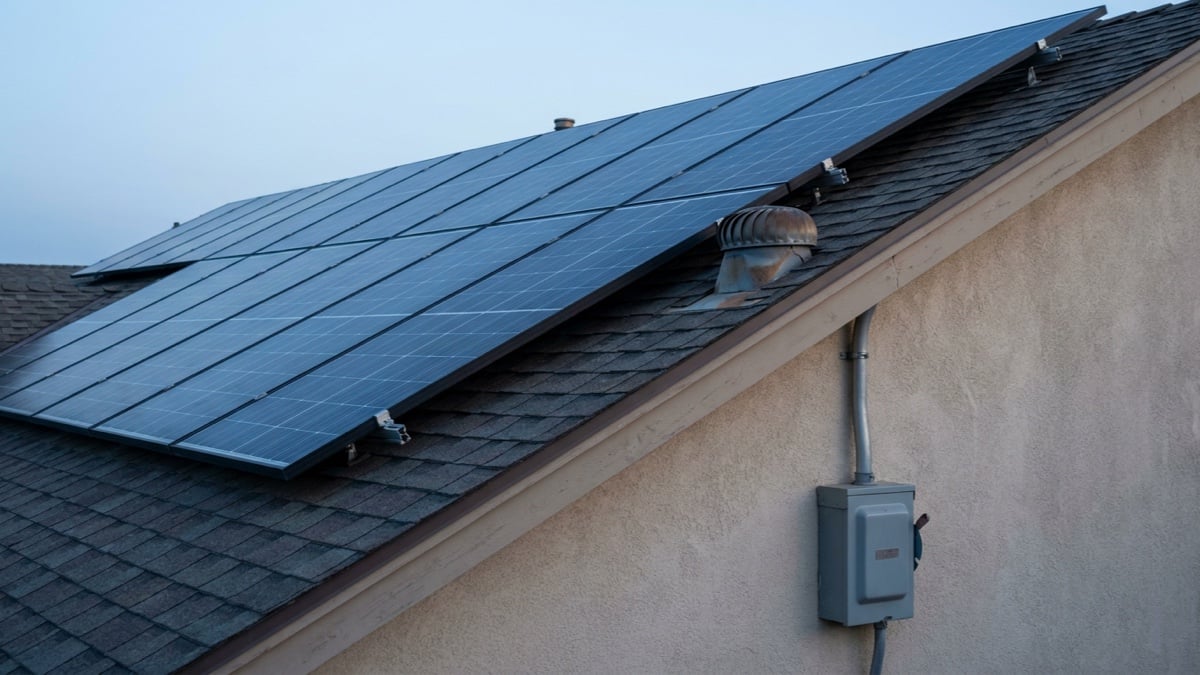
Featured image: AI-generated editorial illustration of a residential rooftop photovoltaic array on asphalt shingles, with mounting rails, conduit and an exterior electrical disconnect box in morning light. No readable text or signage. Not a particular property.