

Yes, and the Florida Legislature says so directly. Section 162.06(5)(c) of the 2026 Florida Statutes requires a seller who transfers a property between service of the initial pleading and the hearing to tell the buyer in writing that the new owner will be responsible for compliance with the code and with orders issued in the proceeding. A transfer does not dismiss the case. Money is a separate question: a recorded fine order becomes a lien on the land, while an unpaid county utility balance can be a lien on the parcel without appearing in the Official Records at all.
The case keeps running after the deed is signed
Chapter 162 governs county and municipal code enforcement across Florida. Section 162.06(5) addresses an owner who transfers the property between the time the initial pleading was served and the time of the hearing. That owner must do four things.
- Disclose in writing the existence and the nature of the proceeding to the prospective transferee.
- Deliver to the prospective transferee a copy of the pleadings, notices and other materials relating to the proceeding that the seller received.
- Disclose in writing that the new owner will be responsible for compliance with the applicable code and with orders issued in the proceeding.
- File a notice of the transfer with the code enforcement official within 5 days after the transfer date, giving the identity and address of the new owner and copies of the disclosures made.
Failing to make the first three disclosures before the transfer creates a rebuttable presumption of fraud under the statute. The statute also settles what happens to the case itself: the proceeding is not dismissed, and the new owner is given a reasonable period of time to correct the violation before the hearing is held.
Read the window precisely. A complaint an inspector is still investigating has not reached that stage, and a case where the board already entered its order has passed it. Neither sits inside the express terms of 162.06(5), and neither goes away because the house changed hands.
What a recorded fine order does to the title
Under section 162.09(3), a certified copy of an order imposing a fine, or a fine plus repair costs, may be recorded in the public records. Once recorded it is a lien against the land on which the violation exists and upon any other real or personal property owned by the violator. The fine keeps accruing until the violator comes into compliance or until judgment is rendered. After three months unpaid, the enforcement board may authorize foreclosure or a suit for a money judgment.
Two limits matter. No lien created under this part of Chapter 162 may be foreclosed on real property that is a homestead under section 4, Article X of the Florida Constitution, and the money judgment provisions do not apply to property covered by section 4(a). Separately, section 162.10 caps the life of such a lien at 20 years after the certified copy was recorded, unless an action is commenced within that time.
Homestead protection stops a forced sale. It does not erase the lien from the record. For how recorded instruments surface in the first place, see our guide to reading a survey against your title exceptions.
Daily fine ceilings are set by statute
Section 162.09(2)(a) sets the baseline. Section 162.09(2)(d) lets a county or a municipality having a population equal to or greater than 50,000 adopt, by a vote of at least a majority plus one of the entire governing body, an ordinance raising those ceilings. Confirm which set applies in the jurisdiction holding the case before you estimate exposure.
| Fine category | Baseline ceiling, 162.09(2)(a) | Enhanced ceiling, 162.09(2)(d) |
|---|---|---|
| First violation | $250 per day | $1,000 per day per violation |
| Repeat violation | $500 per day | $5,000 per day per violation |
| Irreparable or irreversible violation | $5,000 per violation | $15,000 per violation |
| Added to the fine | All costs of repairs made by the local government | Repair costs plus all enforcement costs incurred |
Section 162.09(2)(c) runs the other direction: an enforcement board may reduce a fine it imposed. That reduction is the lever available to a buyer, and compliance is what earns it.
An unpaid utility balance is a different animal
One Florida statute shields a buyer from a prior occupant’s water bill, and its reach is narrow. Section 180.135 bars a municipality from refusing or discontinuing utility, water or sewer service over charges incurred by a former occupant of a rental unit, and bars those charges from becoming a lien on the rental property, except to the extent the present tenant or owner benefited directly from the service provided to the former occupant. It applies only where the former occupant contracted for service with the municipality, or the municipality provided service knowing the occupant’s name and the period served. It speaks to rental units and former occupants. It does not address an ordinary owner-occupied sale.
Local ordinance fills that space. Orange County Code section 37-3(c), in the code version current through September 16, 2026, provides that unpaid rates, fees or charges for county water, wastewater or reclaimed water service, plus accruing interest, are a lien on any parcel or property affected. Those liens are superior and paramount to the interest of any owner, lessee, tenant, mortgagee or other person, except the lien of county taxes, and the county may foreclose them. Section 37-3(b) adds that where the county provides wastewater service but not water service, it may shut off water for unpaid wastewater charges.
Nothing in that provision requires the lien to be recorded before it exists, so a search of recorded instruments is the wrong tool for finding it. Get a written payoff figure from the utility for the account tied to the parcel, dated to your closing.
Three searches that cover the gap
Run all three, because each one finds something the others miss.
- Recorded instruments. Search the Orange County Comptroller’s Official Records at or.occompt.com for recorded fine orders, judgments and releases.
- Open, unrecorded code cases. Orange County publishes a Title Company / Open Code Violation Search built to show whether a violation exists before a sale or closing. The county states that the data may not be 100 percent accurate and asks anyone confirming a specific address to email Code Enforcement at [email protected] with the incident or case number and the address.
- The utility account. Request a payoff balance on the parcel’s service account rather than relying on the seller’s last statement.
In Lake County, the county’s code enforcement case search returns records for unincorporated Lake County only. A home inside Clermont, Minneola, Groveland, Mount Dora, Montverde or any of the county’s other municipalities is handled by that city’s own code enforcement, so the county search returning nothing proves nothing about a city address. Lake County also states that its search data is not certified.
Reading the case status you find
Lake County publishes definitions for the status codes on its search. These labels are that county’s own, and other jurisdictions use different vocabulary for the same stages.
| Status | Lake County definition | What it means for your closing |
|---|---|---|
| OPEN | Under investigation | No order yet and no fine. Ask whether an initial pleading has been served. |
| HEARING | Processing for public hearing | The 162.06(5) disclosure window. Demand the written disclosures and the pleadings. |
| ORDER | An order of enforcement applies | A compliance deadline is running. Fix the condition before it converts to a fine. |
| ORDER OF FINE | Fines assessed | A certified copy may be recorded as a lien. Get a payoff and a release. |
| CLOSE or RSLVONS | Violation closed, or resolved on site | Confirm in writing. A closed violation can still leave a recorded fine order behind. |
| UNVERIFIABLE | Unable to initiate an investigation per Chapter 162 | No case proceeded. The underlying condition may still exist. |
What to require before you sign
When a search turns up anything at all, this is the list to work.
- Written confirmation from the jurisdiction, not a screenshot of a public search. Both counties disclaim the accuracy of their own portals.
- The seller’s 162.06(5) disclosures in writing, plus copies of every pleading and notice the seller received.
- Correction of the underlying condition before closing wherever it is physically possible. Section 162.09(2)(c) lets the board reduce a fine, and compliance is what earns that reduction.
- A dated utility payoff for the parcel’s account, with the amount escrowed if the figure is still moving.
- A separate check for open and expired permits, which travel on their own track, against the broader duty covered in our guide to what Florida sellers must disclose on an AS IS sale.
To talk through a specific property before your inspection period runs, book a strategy session at mvphomegroup.com/nelsoncruz.
Questions buyers ask
The seller says the violation was closed. Is that enough?
No. Lake County states that its case data is not certified and should not be relied upon for official decision-making, and Orange County asks anyone confirming a specific address to email Code Enforcement with the incident or case number. Get the confirmation in writing from the jurisdiction. A closed violation also tells you nothing about whether a certified fine order was recorded along the way, which is a separate search of the Official Records.
The house will be my homestead. Can the county foreclose on it?
Section 162.09(3) says no lien created under this part may be foreclosed on homestead property under section 4, Article X of the Florida Constitution, and that the money judgment provisions do not apply to property covered by section 4(a). The lien still exists on the record, and section 162.10 keeps it alive for 20 years after recording unless an action is commenced. You will be dealing with it the next time you sell or refinance.
Does the previous owner’s unpaid water bill really become my problem?
For Orange County utility service, Code section 37-3(c) makes the unpaid balance and accrued interest a lien on the parcel, superior to every interest except the lien of county taxes. Section 180.135 is written for rental units and former occupants, so it does not answer an owner-occupied purchase. Ask the utility for a payoff figure on the parcel’s account before you close.
Nelson Cruz, P.A.
Founder & CEO
MVP Home Group, Real Broker LLC
Nelson brings nearly two decades in law enforcement to his work in real estate. View Nelson’s profile or contact our team at 407-901-9939 or [email protected].
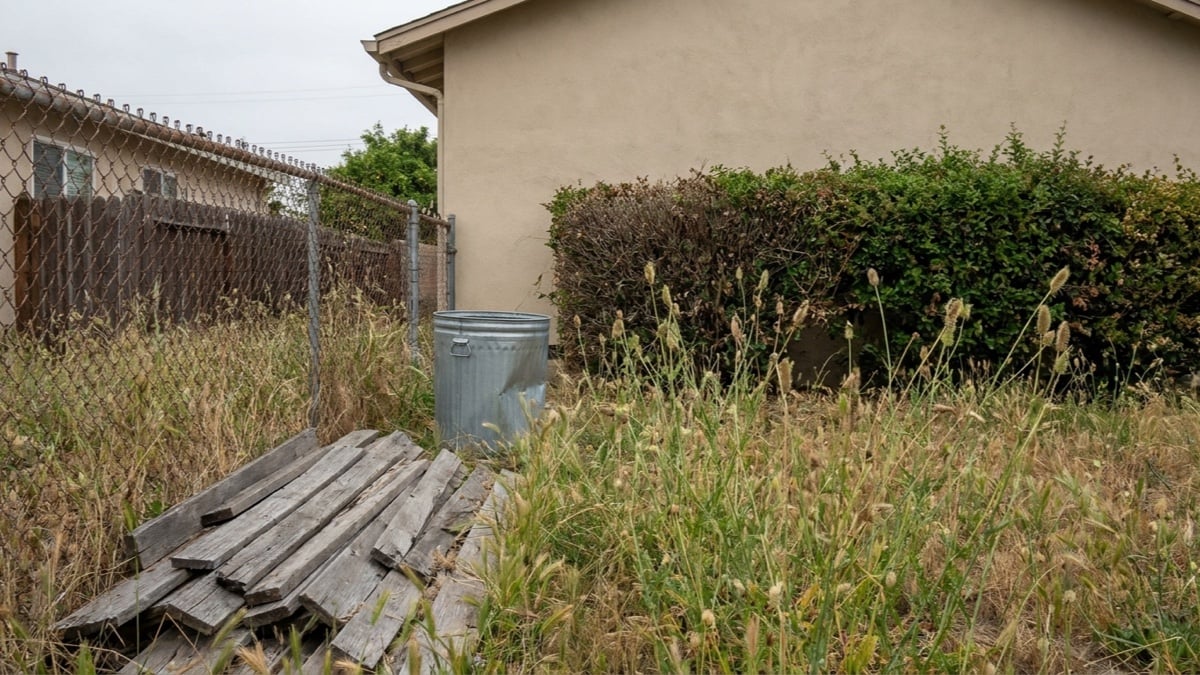
Featured image: AI-generated editorial illustration of a neglected front yard with overgrown grass, a leaning chain-link fence section, stacked discarded lumber and a dented metal trash can beside a plain stucco wall. No people and no readable text. Not a particular property, street or neighborhood.