

Florida’s Residential Swimming Pool Safety Act does not require a fence around every pool. It requires a new residential pool to carry at least one of five safety features in order to pass final inspection and receive a certificate of completion, and an isolating four-foot barrier is only the first of those five. The others are an approved safety pool cover, exit alarms on the doors and windows that open to the pool, self-closing and self-latching devices on those doors, or an alarm in the water. Because the requirement is written into the inspection that closed out the pool’s permit, the home you are buying may satisfy it with a door device rather than a fence, and a property insurer can still decline the risk on that basis.
Five ways a pool can satisfy the statute
Chapter 515, Florida Statutes, is the Preston de Ibern/McKenzie Merriam Residential Swimming Pool Safety Act. Section 515.27(1) states that in order to pass final inspection and receive a certificate of completion, a residential swimming pool must meet at least one of five requirements. They are alternatives, not a stack.
| Option in s. 515.27(1) | What the statute requires | What this means on a walk-through |
|---|---|---|
| (a) Isolating barrier | The pool is isolated from access to the home by an enclosure meeting the barrier requirements of s. 515.29 | A fence, wall or screen line around the pool with a compliant gate |
| (b) Safety pool cover | An approved safety pool cover, defined in s. 515.25(1) as meeting ASTM F1346-91 | A manual or powered cover, which only protects when it is closed |
| (c) Exit alarms | All doors and windows with direct access from the home to the pool carry an exit alarm rated at least 85 dB A at 10 feet | Every opening, not just the main slider, and the battery has to work |
| (d) Door devices | All doors with direct access from the home to the pool carry a self-closing, self-latching device with a release no lower than 54 inches above the floor | The door closes and latches on its own from a few inches open |
| (e) Pool alarm | An in-water alarm independently certified to ASTM F2208 | A device in the pool, easily unplugged or removed by a prior owner |
The scope is broader than an in-ground pool. Section 515.25(11) reaches any structure in a residential area intended for swimming or recreational bathing that holds water more than 24 inches deep, including aboveground and on-ground pools, hot tubs and nonportable spas. Section 515.25(10) limits “residential” to a detached one-family or two-family dwelling, or a one-family townhouse no more than three stories high. Section 515.37 puts public pools, kiddie pools and a portable spa with an ASTM F1346-91 cover outside the chapter entirely.
What a compliant barrier has to measure
Section 515.29 states the barrier rules in words rather than numbers: at least four feet high on the outside, no gaps or protrusions that could let a young child crawl under, squeeze through or climb over it, and placement around the pool perimeter separately from a yard fence unless that fence sits on the perimeter and meets the section itself. Section 515.25(12) defines a young child as a person under six.
The measurements a building department inspects to are in the Florida Building Code, Residential, Eighth Edition (2023), which the Florida Building Commission lists as effective December 31, 2023. Section R4501.17.1 fixes the numbers:
- At least 48 inches from grade to the top of the barrier, measured on the side facing away from the pool, with no more than 2 inches of clearance at the bottom on that same side.
- No opening anywhere in the barrier may pass a 4-inch-diameter sphere.
- Where the barrier has horizontal and vertical members less than 45 inches apart at the tops of the horizontals, the horizontals go on the pool side and vertical spacing may not exceed 1 3/4 inches. At 45 inches or more apart, vertical spacing may go to 4 inches.
- Chain link is capped at a 2 1/4-inch square mesh unless slats reduce the openings to 1 3/4 inches or less.
- A gate latch release 54 inches or more above the bottom of the gate may sit on either side, and the gate and barrier may have no opening greater than 1/2 inch within 18 inches of the release.
- Where the barrier is mounted on top of an aboveground pool structure, no more than 4 inches of clearance between the structure and the bottom of the barrier.
Section R4501.19 requires the final electrical and barrier inspection to be completed before the pool is filled with water, which is why the barrier question and the permit question are the same question. Confirm with the building department which code edition governs the address, since the Commission’s own code page also carries materials for a 2026 update.
The requirement attaches to the permit, not to the owner
This is the part that changes what a buyer should do. Section 515.27(1) conditions the final inspection and the certificate of completion. The penalty in s. 515.27(2) reaches a person who fails to equip a new residential swimming pool, and the legislative intent in s. 515.23 is that all new residential pools, spas and hot tubs be equipped. Chapter 515 is a construction and permitting requirement. It does not set up a recurring state inspection of pools already built, so a feature that satisfied a final inspection in a past year can be removed, unplugged or left broken without the chapter itself generating any notice.
The penalty is also narrow. It is a second-degree misdemeanor, and none is imposed if the person equips the pool with one of the five features and attends the Department of Health drowning prevention program under s. 515.31 within 45 days of arrest or a summons. More useful to a buyer is s. 515.37(4), which exempts any political subdivision that has adopted a residential pool safety ordinance equal to or more stringent than the chapter. The governing text for a specific address can therefore be a city or county ordinance stricter than the state act, and the building department is the office that tells you which applies.
Chapter 515 also gives a resale buyer nothing to read. Section 515.33 puts the disclosure duty on a licensed pool contractor entering an agreement to build a pool, or a licensed home builder or developer entering an agreement to build a house that includes one, and the document plus the Department of Health publication goes to that buyer. Buying an existing pool home, you are back to the seller’s general disclosure obligation and to what an as-is contract does and does not change about it.
Screen enclosures and the water’s edge
Screened pool decks are standard in our market, and the code addresses them directly. Section R4501.17.1.11 provides that a standard screen enclosure meeting Section R4501.17 may be used as part or all of the barrier and is treated as a nondwelling wall. The cage can be the barrier. It still has to satisfy the rest of the section, including the gate rules, so a screen door that does not self-close and self-latch with the release positioned as the code requires is not compliant merely because the enclosure around it is. Check the door, not the mesh.
Placement then decides what can physically be installed as a fix. Under Section R4501.17.1.13, a removable child barrier must sit no less than 20 inches from the barrier to the water’s edge, while dwelling or nondwelling walls including screen enclosures may be as close to the water’s edge as the code otherwise permits. On a narrow deck, that 20-inch setback can rule out a mesh fence.
Where a wall of the house forms part of the barrier, s. 515.29(4) allows it only if the wall contains no door or window that opens to provide access to the pool. Section R4501.17.1.9 supplies the alternatives when it does: exit alarms complying with UL 2017 rated at 85 dBA at 10 feet, self-closing and self-latching devices with positive mechanical latching at least 54 inches above the threshold, or an ASTM F2208 pool alarm. It also excuses certain windows, including those with a sill 48 inches or more above the interior finished floor at the pool access level and windows above the first story.
Code compliant and insurable are separate tests
A pool can clear the building code and still fail an insurer’s eligibility rule, and that surfaces when you bind coverage rather than when you sign the contract. Citizens Property Insurance Corporation publishes its position. In Answer ID 1976, updated July 27, 2026, Citizens states for Personal Residential Multiperil that properties with pools and similar structures must be completely fenced, walled or screened, and adds that child barrier pool safety mesh style fencing or similar pool safety fencing is not considered permanent and is unacceptable. Its Answer ID 1490, updated December 18, 2025, repeats the fenced, walled or screened requirement.
Set that against the code. Section R4501.17.1.15 treats a mesh safety barrier complying with ASTM F2286 and installed per the manufacturer’s instructions as a barrier, and the exception to Section R4501.17 lets an approved ASTM F1346 safety pool cover stand in for a barrier altogether. So a pool that passed inspection on mesh fencing, a cover or a door alarm meets the code and does not meet the Citizens rule quoted above. Other carriers set their own underwriting rules, which makes the only reliable answer a quote on the barrier as it exists today, ordered early enough to act on. The same timing logic governs the inspection an insurer may require before it will write the policy.
What to pull before your inspection period ends
- The pool’s permit record and closing inspection, plus separate records for the screen enclosure or fence, since an open or expired permit is its own problem to resolve.
- Which of the five features the final inspection relied on, and whether that specific feature is still present and functioning.
- Every door and window that opens onto the pool deck, tested one at a time rather than assumed from the main slider.
- The gate: outward swing, self-close from a few inches open, self-latch without help, release on the pool side.
- Three measurements with a tape: 48 inches at the outside face, the bottom clearance, and the widest opening against a 4-inch sphere.
- Whether the city or county has adopted its own pool safety ordinance under s. 515.37(4).
- A bindable insurance quote describing the barrier that exists now, not the one a listing photo suggests.
- Anything climbable standing against the barrier, since s. 515.29(5) bars a barrier placed where a permanent structure, equipment or similar object can be used to climb it. Pool equipment, a planter or a storage box against the fence defeats it.
Price the fix before the deadline. A gate closer or a set of door devices is a modest line item, while adding a code-compliant fence or rerouting a barrier on a tight deck is a different order of expense, and the permit record tells you which one you are facing. Your written objection or cancellation runs on the contract’s inspection deadline rather than on when the building department answers, so order records the day you go under contract. What your inspection period actually lets you do is worth reading before you rely on it.
Frequently Asked Questions
Does Florida law require a fence around an existing residential pool?
Not as an ongoing duty under Chapter 515. The chapter conditions the final inspection and certificate of completion for a new residential pool, and it accepts any one of the five features in s. 515.27(1), of which a barrier is one. It does not create a recurring state inspection of pools already built. A local ordinance can be different: s. 515.37(4) exempts a political subdivision that has adopted a residential pool safety ordinance equal to or more stringent than the chapter, so the rule for a particular address may be a city or county ordinance. Ask the building department which governs before drawing a conclusion from the statute alone.
Do hot tubs and spas count as pools under the act?
Generally yes. Section 515.25(11) includes hot tubs and nonportable spas in the definition of a swimming pool, where the structure is in a residential area and holds water more than 24 inches deep. The carve-out is s. 515.37(5), which excludes a portable spa fitted with a safety cover complying with ASTM F1346-91. A plumbed-in spa on the pool deck is inside the chapter; a cord-connected portable spa with a compliant cover is outside it.
Who pays to bring a pool barrier into compliance after closing?
Whoever owns the home when the work is done, unless the contract says otherwise. Chapter 515 creates no transfer-triggered duty and no disclosure obligation to a resale buyer, so nothing in the statute shifts the cost to the seller. That makes it a negotiation during the inspection period, which is why the quote and the permit record need to be in hand before the deadline rather than after it.
Buying a pool home in Central Florida
A pool is a records question before it is a condition question, and the window to ask it is short. We can pull the permit history for a specific address, identify which of the five features the pool was signed off on, and tell you what the barrier as built will mean for your insurance quote, all inside your inspection period. For the communities we cover across Orange, Lake, Osceola, Seminole, Polk and Volusia counties, see our community pages. To work through a specific property, book a strategy session at mvphomegroup.com/nelsoncruz. This is general information about Florida statutes, building code requirements and published insurer eligibility rules, not legal advice, not insurance advice, and not a determination about any particular property.
Nelson Cruz, P.A.
Founder & CEO
MVP Home Group, Real Broker LLC
Nelson brings nearly two decades in law enforcement to his work in real estate. View Nelson’s profile or contact our team at 407-901-9939 or [email protected].
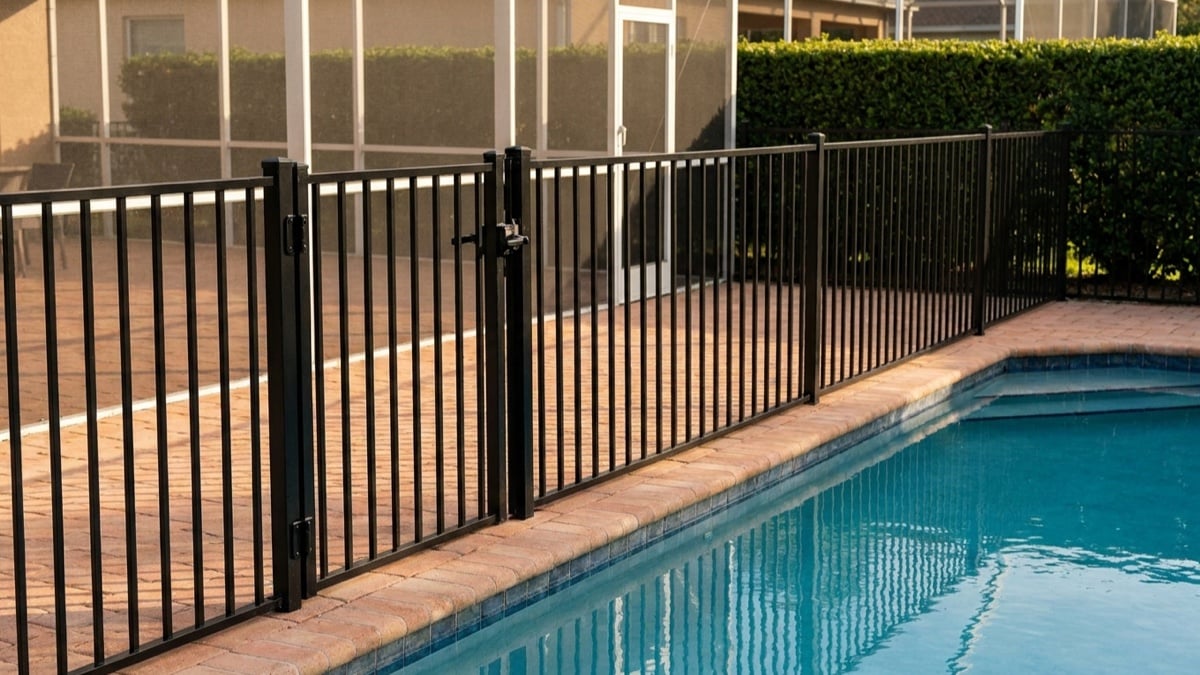
Featured image: AI-generated editorial illustration of a black aluminum pool safety fence and gate running along the paver deck of a residential swimming pool in afternoon light. Illustrative only, not an example of a compliant barrier. No readable text or markings. Not a particular property or listing.